Current numbers, October 7, 2026
Condos listed on the MLS right now, refreshed every six hours.
| Neighborhood | For sale | Median asking | Median $/sq ft | For rent | Median rent |
|---|---|---|---|---|---|
| Hollywood | 71 | $715K | $598 | 104 | $4,073/mo |
| West Hollywood | 173 | $899K | $833 | 205 | $4,695/mo |
| Downtown LA | 331 | $589K | $613 | 169 | $3,200/mo |
Medians appear only when enough listings publish the figure; a dash means too few to report. Full neighborhood reports
Why Hollywood Doesn't Behave Like the Rest of LA
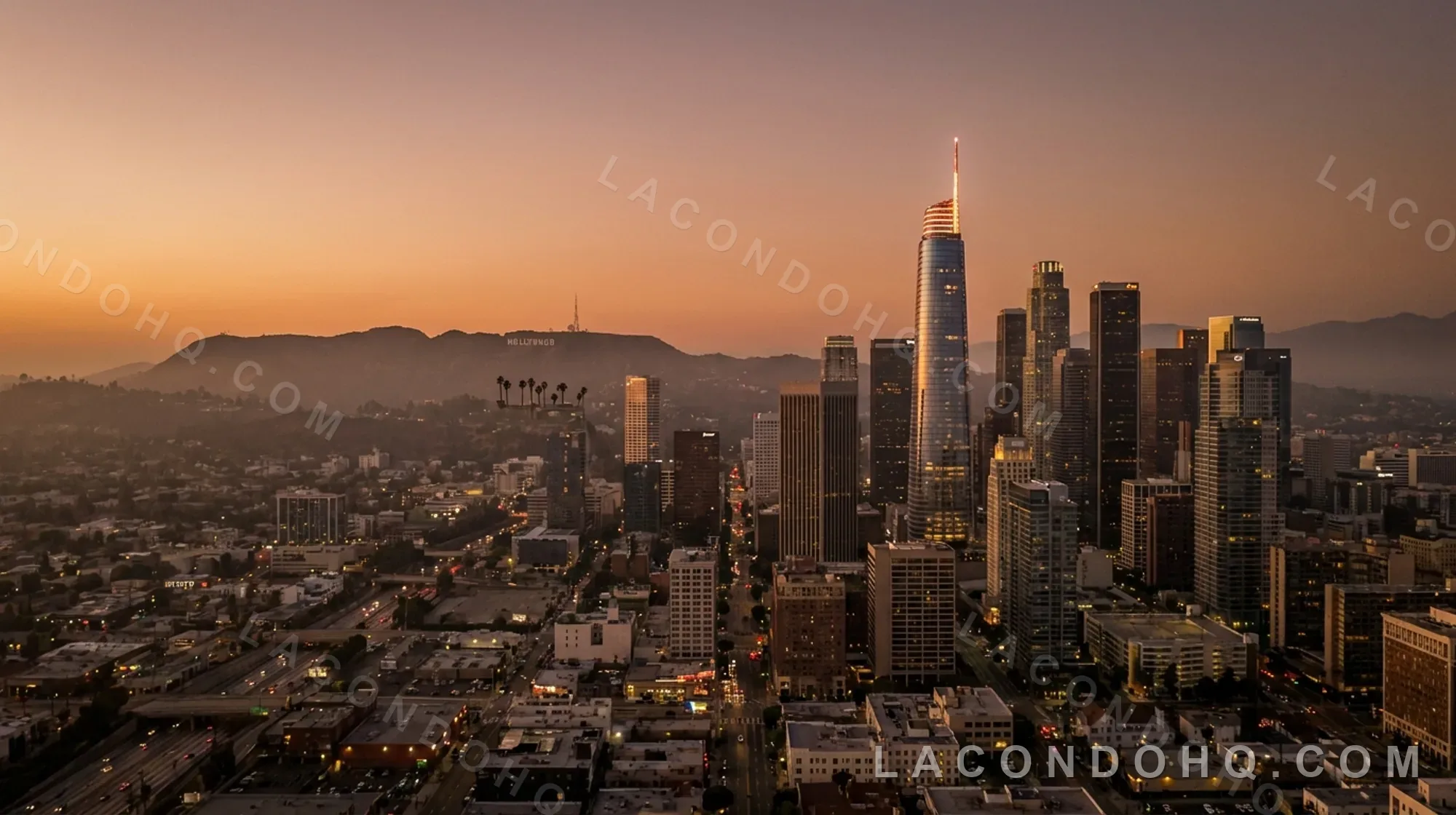
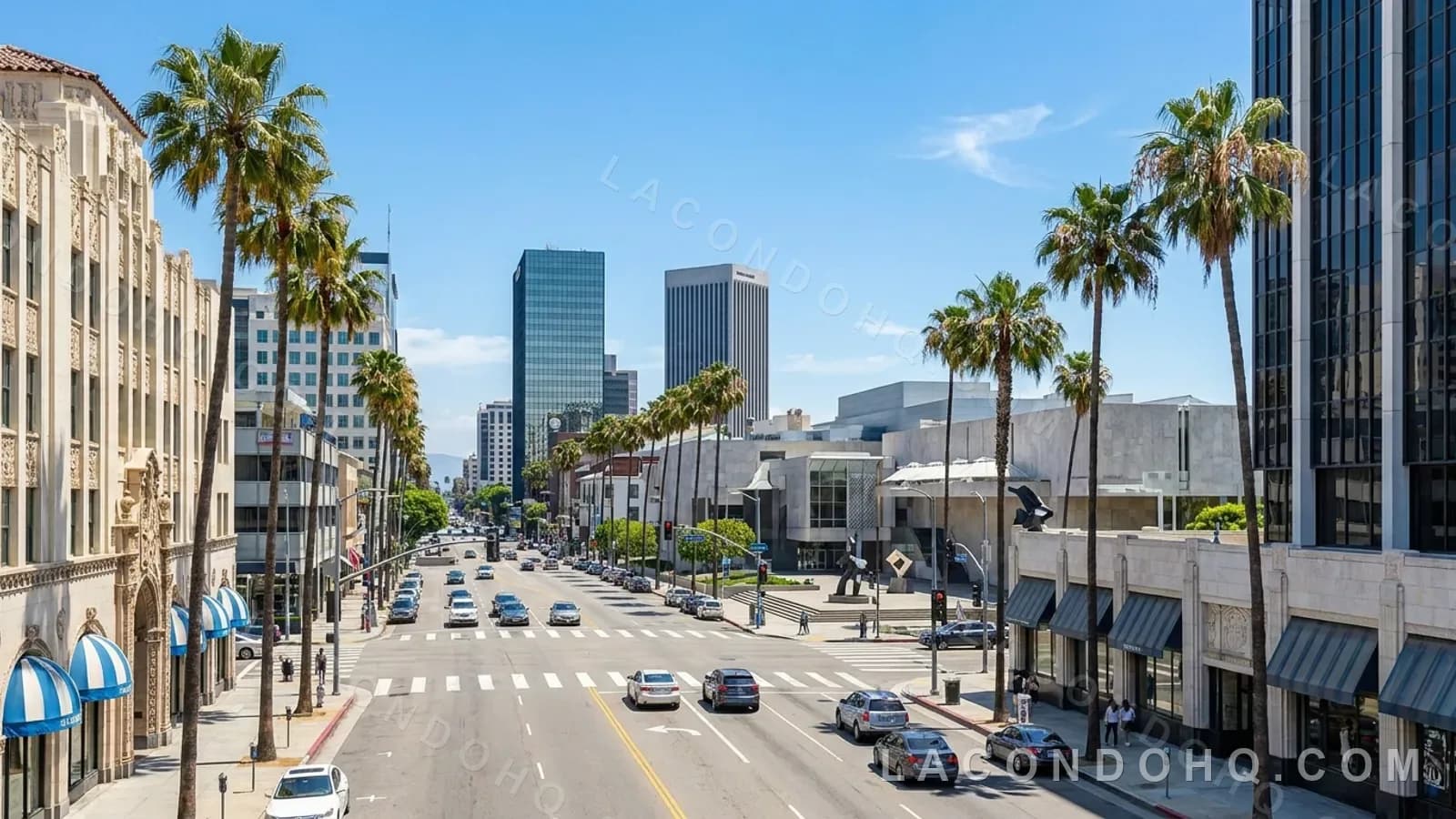
Most of Los Angeles asks you to own a car and accept sprawl in exchange for space. Hollywood is the exception. Our research treats it as LA's iconic entertainment core, a genuinely walkable, transit-served urban district where you can walk to dinner, the subway, and a rooftop pool in the same evening. The housing stock is unusually layered: restored 1920s art-deco and Spanish-revival buildings sit beside mid-century apartments and glassy new high-rise condos, all inside the flat grid below the hills. For a buyer, that mix is the whole appeal, and it is why Hollywood rewards a little homework before you tour.
The Boulevard and the Landmarks That Anchor It
Hollywood Boulevard is the spine, and the landmarks along it double as your orientation map. The Hollywood Walk of Fame, the TCL Chinese Theatre, and the Dolby Theatre, home of the Academy Awards, cluster within a few blocks of the busiest condo corridors. Just off the boulevard sit the Capitol Records Building, the Pantages Theatre, and a dense run of music venues and nightlife, with the Sunset Strip beginning just to the west. Above it all is the Hollywood Bowl, the legendary outdoor amphitheater tucked into the hills. Buying here means those places become your walking-distance neighborhood, not a weekend outing, and that everyday access is a large part of what holds value in the corridor.
New Towers or a 1920s Landmark Building?
The clearest fork for a Hollywood condo buyer is new construction versus historic. On the new side, our directory tracks marquee high-rises such as Eastown, the SLS-branded residences, and the Argyle, glassy full-service towers built for car-light living near Hollywood/Vine and Hollywood/Highland. On the historic side are the 1920s buildings that give the neighborhood its texture. Some of those older buildings are Mills Act eligible; the Mills Act is a California program that can reduce property taxes on qualifying historic properties in exchange for their preservation, so a building's age and any historic designation are worth confirming before you write an offer. Which side you land on usually comes down to whether you want amenities and elevators or character and a potential tax angle.
Can You Actually Live Here Without a Car?
Yes, and that is genuinely unusual for LA. Hollywood is served by three Metro B (Red) Line stations, at Hollywood/Highland, Hollywood/Vine, and Hollywood/Western, giving you one-seat subway rides to Downtown and into the Valley. Our research puts the neighborhood's Walk Score well above the LA average, and many newer towers are designed specifically for residents who commute by rail rather than freeway. For weekend life, Runyon Canyon Park delivers the celebrity-favorite hike and sweeping city views a few minutes uphill. If living car-light is a real goal rather than a slogan, Hollywood is one of the few LA neighborhoods that can actually deliver on it.
What Hollywood Condos Cost
As of September 26, 2026, the median asking price on condo listings in Hollywood was about $691,000, roughly $598 per square foot (/market-reports/hollywood), across 67 condos listed for sale on LA Condo HQ, with asking prices running from $428,000 to about $2.2 million. These are asking prices, not closed sales. Set against Beverly Hills or Brentwood, that is a markedly lower entry point into prime, centrally located LA real estate, with upside tied to the corridor's continued redevelopment. Because active inventory and asking prices move week to week, check the report and /market-stats for the current median, days on market, and price per foot before you anchor a budget or an offer.
HOA Dues, Reserves and Insurance in a Full-Service Tower
Amenities are not free. Hollywood's most desirable buildings, the full-service high-rises with pools, gyms, and concierge, carry higher HOA dues than a walk-up, and those dues fund the staff and systems you are buying into. Under California's Davis-Stirling Act, condo associations must maintain reserve studies and disclose budgets, so ask for the reserve study, the reserve balance, and any special assessments before you commit; thin reserves in an amenity-heavy tower are a real risk. On insurance, the HOA master policy covers the structure while you carry an individual HO-6 walls-in policy, and California's harder insurance market makes it worth confirming the building is fully covered, through the private market or the state FAIR Plan, early in escrow.
Who Hollywood Is Really For
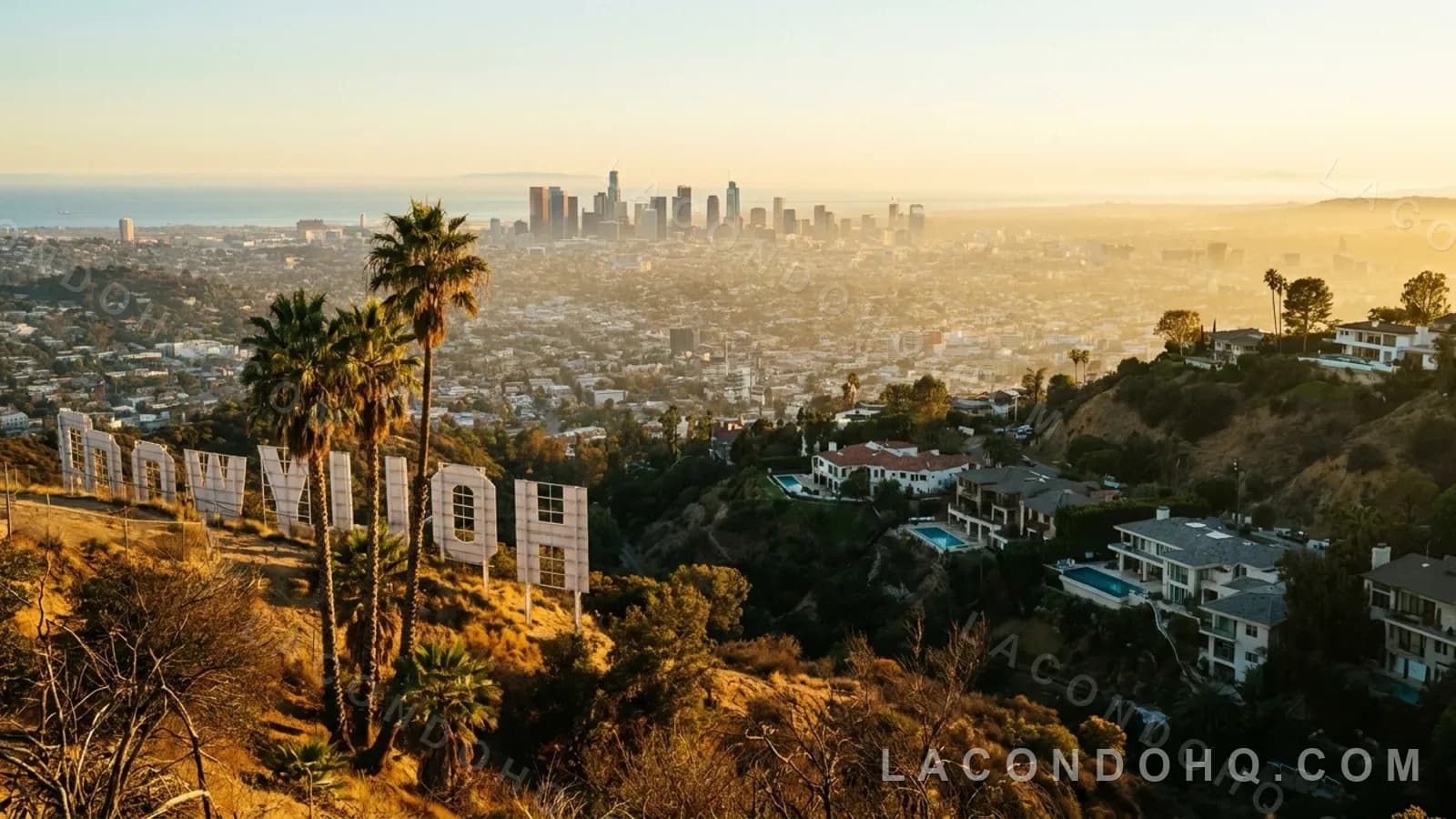
Hollywood fits three buyers especially well. Young creatives and entertainment-industry professionals get proximity to the studios and a genuinely urban lifestyle on foot. Investors get Metro access, steady rental demand, and a lower entry price than the Westside for a central address. And car-light urbanites, the people who would rather ride the Red Line than sit on the 101, get one of the only LA neighborhoods built for that life. If you want a quiet, low-density, single-family street, the flat core of Hollywood is not it, and the Hollywood Hills just north is where that buyer should look instead.
Questions buyers ask about Hollywood condos
How much does a Hollywood condo cost?
As of September 26, 2026, the median asking price on Hollywood condo listings was about $691,000, roughly $598 per square foot, with asking prices running from $428,000 to about $2.2 million. Set against Beverly Hills or Brentwood that is a markedly lower entry point into prime, centrally located LA real estate. These are asking prices on listings published on LA Condo HQ, not closed sales, so check current listings before you anchor a budget or an offer.
Can you live in Hollywood without a car?
Yes, and that is genuinely unusual for Los Angeles. Hollywood is served by three Metro B (Red) Line stations — Hollywood/Highland, Hollywood/Vine and Hollywood/Western — giving one-seat subway rides to Downtown and into the Valley, and our research puts the neighborhood's Walk Score well above the LA average. Many newer towers are designed specifically for residents who commute by rail rather than freeway.
What is the Mills Act?
A California programme that can reduce property taxes on qualifying historic properties in exchange for their preservation. Some of Hollywood's 1920s buildings are Mills Act eligible, so a building's age and any historic designation are worth confirming before you write an offer.
Should I buy new construction or a historic building?
It usually comes down to whether you want amenities and elevators or character and a potential tax angle. On the new side our directory tracks marquee high-rises such as Eastown, the SLS-branded residences and the Argyle, glassy full-service towers built for car-light living near Hollywood/Vine and Hollywood/Highland. On the historic side are the 1920s art-deco and Spanish-revival buildings that give the neighborhood its texture.
What should I check on a full-service Hollywood tower?
Amenities are not free, so ask for the reserve study, the reserve balance and any special assessments before you commit — thin reserves in an amenity-heavy tower are a real risk, and under California's Davis-Stirling Act associations must maintain reserve studies and disclose budgets. On insurance, the HOA master policy covers the structure while you carry an individual HO-6 walls-in policy, and California's harder market makes it worth confirming the building is fully covered early in escrow.

Written by
LA Condo HQ
Real-estate research publisher
LA Condo HQ is published by Eltherion, LLC to help readers research Los Angeles buildings, neighborhoods and real-estate decisions. We publish source notes, ownership guides and practical tools, and help readers request introductions to licensed partner agents. We are not a licensed brokerage.