Current numbers, October 6, 2026
Condos listed on the MLS right now, refreshed every six hours.
| Neighborhood | For sale | Median asking | Median $/sq ft | For rent | Median rent |
|---|---|---|---|---|---|
| Mid-Wilshire | 20 | $755K | $618 | 97 | $4,400/mo |
| Downtown LA | 333 | $589K | $614 | 169 | $3,200/mo |
| Hollywood | 72 | $707K | $596 | 101 | $3,995/mo |
Medians appear only when enough listings publish the figure; a dash means too few to report. Full neighborhood reports
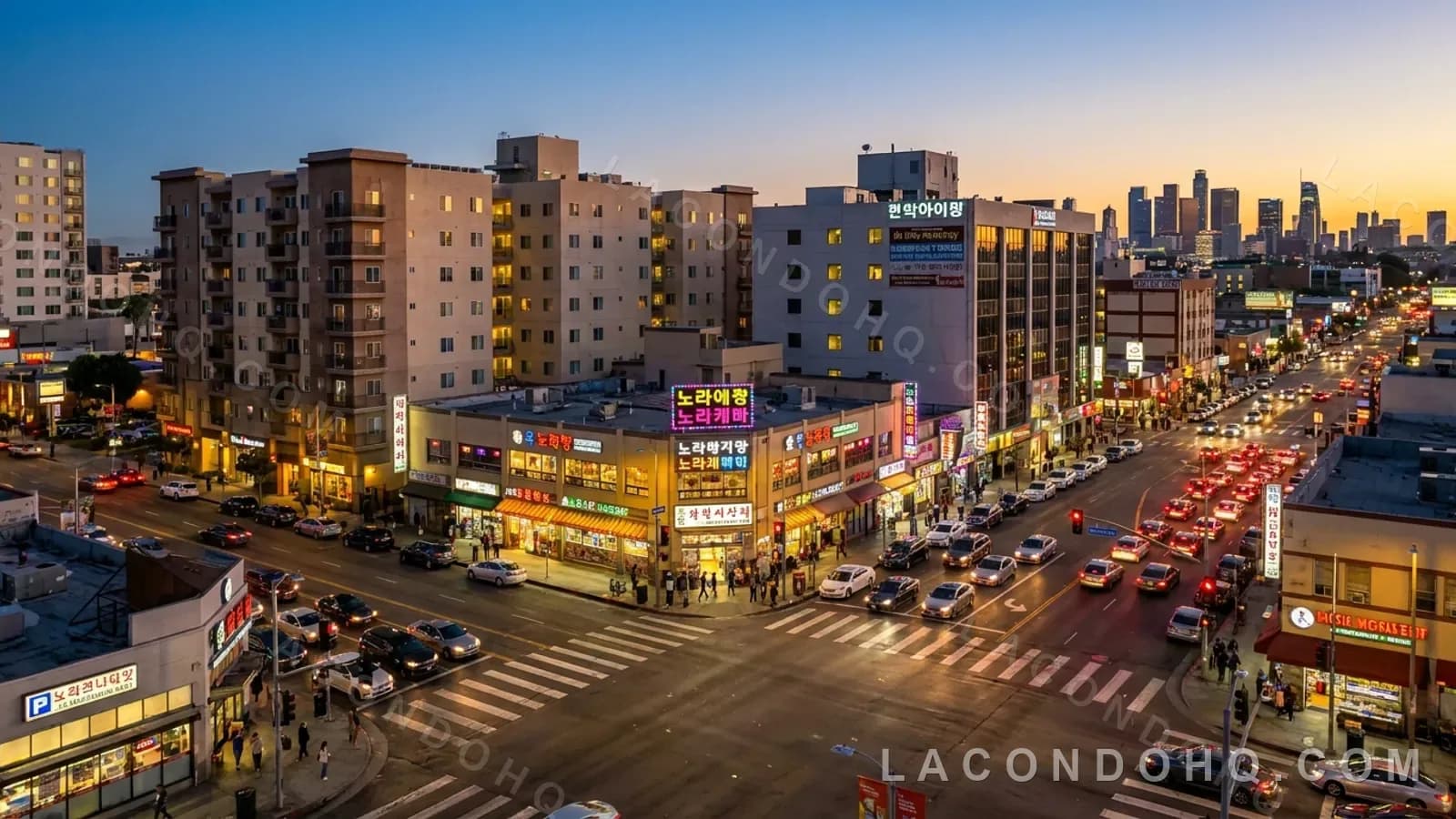
Koreatown is the most misunderstood value in central Los Angeles. To outsiders it is Korean barbecue and neon; to condo buyers who do the math, it is one of the few core LA neighborhoods that still pairs genuine urban density, two Metro lines and walkable everything with prices far below the Westside. This is a guide to how K-Town's condo market actually works and who it fits.
LA's densest square mile
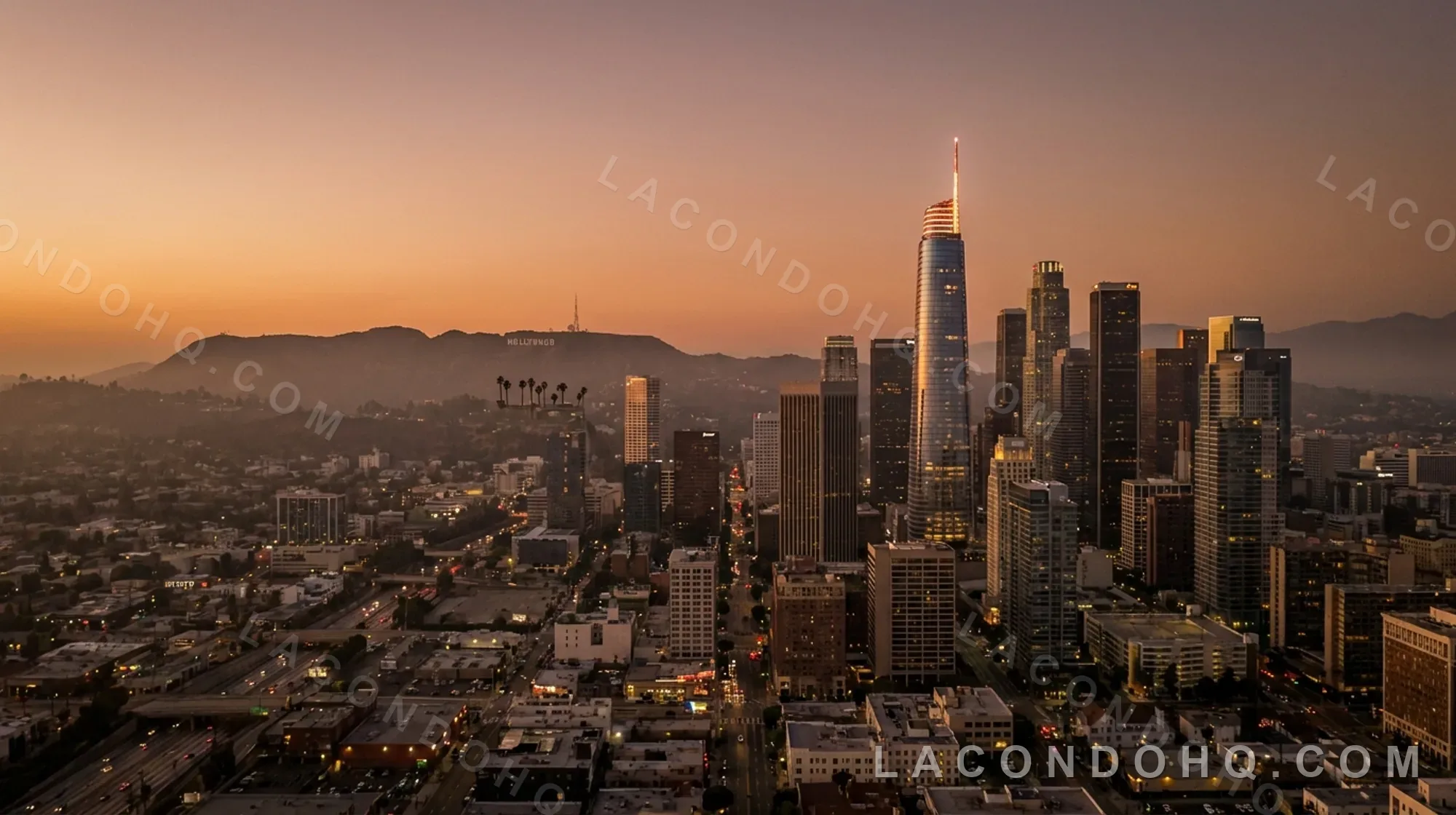
Koreatown is the densest, most around-the-clock neighborhood in Los Angeles — a rare thing in a city built horizontally. That density is the product: sidewalks busy at midnight, a restaurant and nightlife scene widely rated among the city's best, and a central position between Downtown and Hollywood that puts most of LA within easy reach. For buyers who actually want an urban life in a city that mostly resists one, K-Town is the closest Los Angeles comes to a true 24-hour neighborhood.
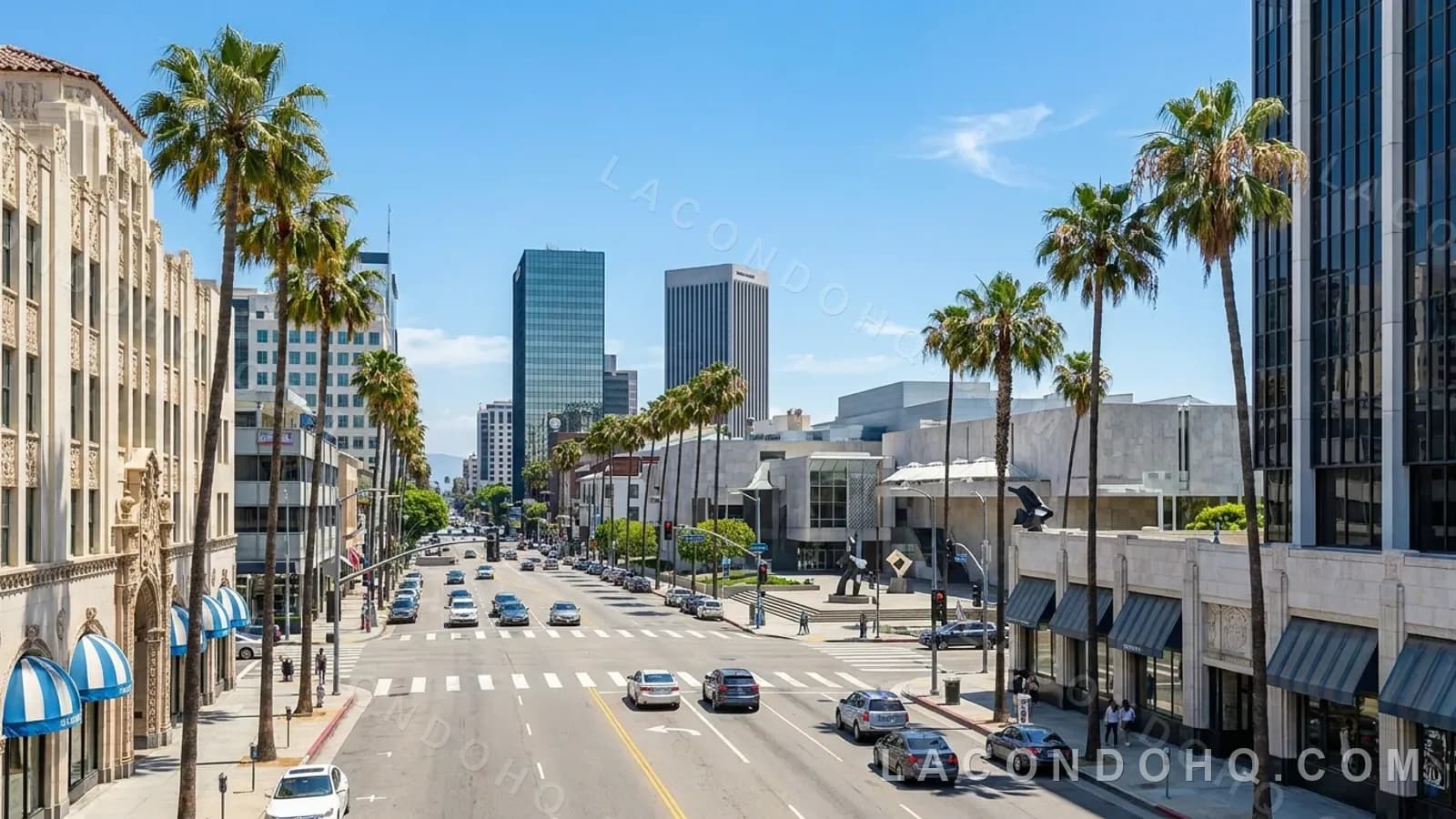
Art Deco towers and glass high-rises, side by side
Koreatown’s residential buildings should not be classified as condominiums from their appearance or age. The Pearl on Wilshire’s operator advertises apartments and a leasing center. That is rental housing, not a verified condominium purchase offering. For any other property on a buyer’s shortlist, start with the exact legal interest and the documents governing that residence before comparing maintenance, amenities or prices.
Why the value gap exists
The headline for buyers is price. As of September 26, 2026, the median asking price on condo listings in Koreatown was about $695,000, roughly $603 per square foot (/market-reports/koreatown), across 132 condos listed for sale on LA Condo HQ. That puts Koreatown in the same value tier as Downtown LA and Hollywood and far below the Westside, where Westwood's median asking price per square foot was about $747 and Santa Monica's about $997 the same day. The gap is not a knock on the neighborhood; it is a mix of perception, density and an older building stock, and it is precisely why value-minded buyers who want walkability and transit shop here first. The discount versus the Westside is the investment case. These are asking prices, not closed sales, and the citywide picture is at /market-stats.
Transit, walkability and the 24-hour city
Few LA neighborhoods can claim K-Town's transit access: two Metro rail lines run through it, which in a car-dependent city is a genuine and rare amenity that supports a lower-car or car-free life. Layer on the walkability — groceries, gyms, restaurants and nightlife within blocks — and Koreatown offers a lifestyle that most of Los Angeles simply cannot. For young professionals and creatives, that combination of transit, walkability and price is the whole appeal, and it is why the neighborhood's energy keeps drawing buyers priced out of the Westside.
What to check before you buy in K-Town
The older, denser stock rewards careful diligence. In a historic building, read the reserve study and the record of assessments closely — restored landmarks are beautiful but carry the mechanical and structural realities of their age. In a newer high-rise, confirm which amenity costs the dues actually fund. Everywhere, pull the HOA budget and minutes and, under California's Davis-Stirling framework, the documents you are entitled to in escrow. Density also means variation block to block, so spend time on the specific street, day and night, before you commit.
Who Koreatown fits
Koreatown fits the buyer who wants real urban density, transit and walkability, and who would rather spend on location than on a marble lobby — the value-minded professional or investor who sees the price gap as opportunity rather than warning. It fits less well if you want quiet, low-density calm or a brand-new building as the default; those exist here but are the exception, not the rule. For current pricing across LA's core neighborhoods, our market report at /market-stats carries it, and when you have a specific building in view, we will read its documents with you.
Questions buyers ask about Koreatown condos
Why are Koreatown condos cheaper?
As of September 26, 2026, the median asking price on Koreatown condo listings was about $695,000, roughly $603 per square foot, in the same tier as Downtown LA and Hollywood and far below the Westside. The gap is not a knock on the neighborhood — it is a mix of perception, density and an older building stock, and it is precisely why value-minded buyers who want walkability and transit shop here first. Current figures are at /market-stats.
What should I check when comparing Koreatown buildings?
Verify whether the advertised home is a condominium purchase, a cooperative interest or a rental, then compare its specific documents and costs. The Pearl on Wilshire is marketed through apartment leasing and should not be treated as condominium purchase inventory.
How good is the transit?
Few LA neighborhoods can match it — two Metro rail lines run through Koreatown, which in a car-dependent city is a genuine and rare amenity supporting a lower-car or car-free life. Layer on walkability, with groceries, gyms, restaurants and nightlife within blocks, and it offers a lifestyle most of Los Angeles simply cannot.
Is Koreatown really the densest part of LA?
It is the densest, most around-the-clock neighborhood in the city — a rare thing in a place built horizontally. That density is the product: sidewalks busy at midnight, a restaurant and nightlife scene widely rated among the city's best, and a central position between Downtown and Hollywood.
What should I check before buying in Koreatown?
The older, denser stock rewards careful diligence. In a historic building read the reserve study and the record of assessments closely, because restored landmarks carry the mechanical and structural realities of their age. In a newer high-rise, confirm which amenity costs the dues actually fund. Everywhere, pull the HOA budget and minutes and the documents you are entitled to in escrow, and spend time on the specific street, day and night, because density means real variation block to block.
Sources and review scope
Sources checked 2026-09-06. The notes identify which facts each publication supports.
- Published property identity — The Pearl
The Pearl on Wilshire’s official gallery describes apartments and a leasing center. It supports the rental community at 687 South Hobart Boulevard.

Written by
LA Condo HQ
Real-estate research publisher
LA Condo HQ is published by Eltherion, LLC to help readers research Los Angeles buildings, neighborhoods and real-estate decisions. We publish source notes, ownership guides and practical tools, and help readers request introductions to licensed partner agents. We are not a licensed brokerage.