Current numbers, September 30, 2026
Condos listed on the MLS right now, refreshed every six hours.
| Neighborhood | For sale | Median asking | Median $/sq ft | For rent | Median rent |
|---|---|---|---|---|---|
| Downtown LA | 336 | $587K | $616 | 168 | $3,200/mo |
Medians appear only when enough listings publish the figure; a dash means too few to report. Full neighborhood reports
Most cities that sell "lofts" are selling drywall boxes with tall ceilings. Downtown Los Angeles sells the real thing: banks, department stores, garment showrooms and warehouses converted into housing, with the brick, timber and concrete to prove it. The conversions happened at scale because of the city's adaptive-reuse ordinance, which made it feasible to turn obsolete commercial buildings into residences — and they created a loft market with genuine variety. This guide covers how the districts differ and what loft-specific due diligence looks like.
Three districts, three personalities
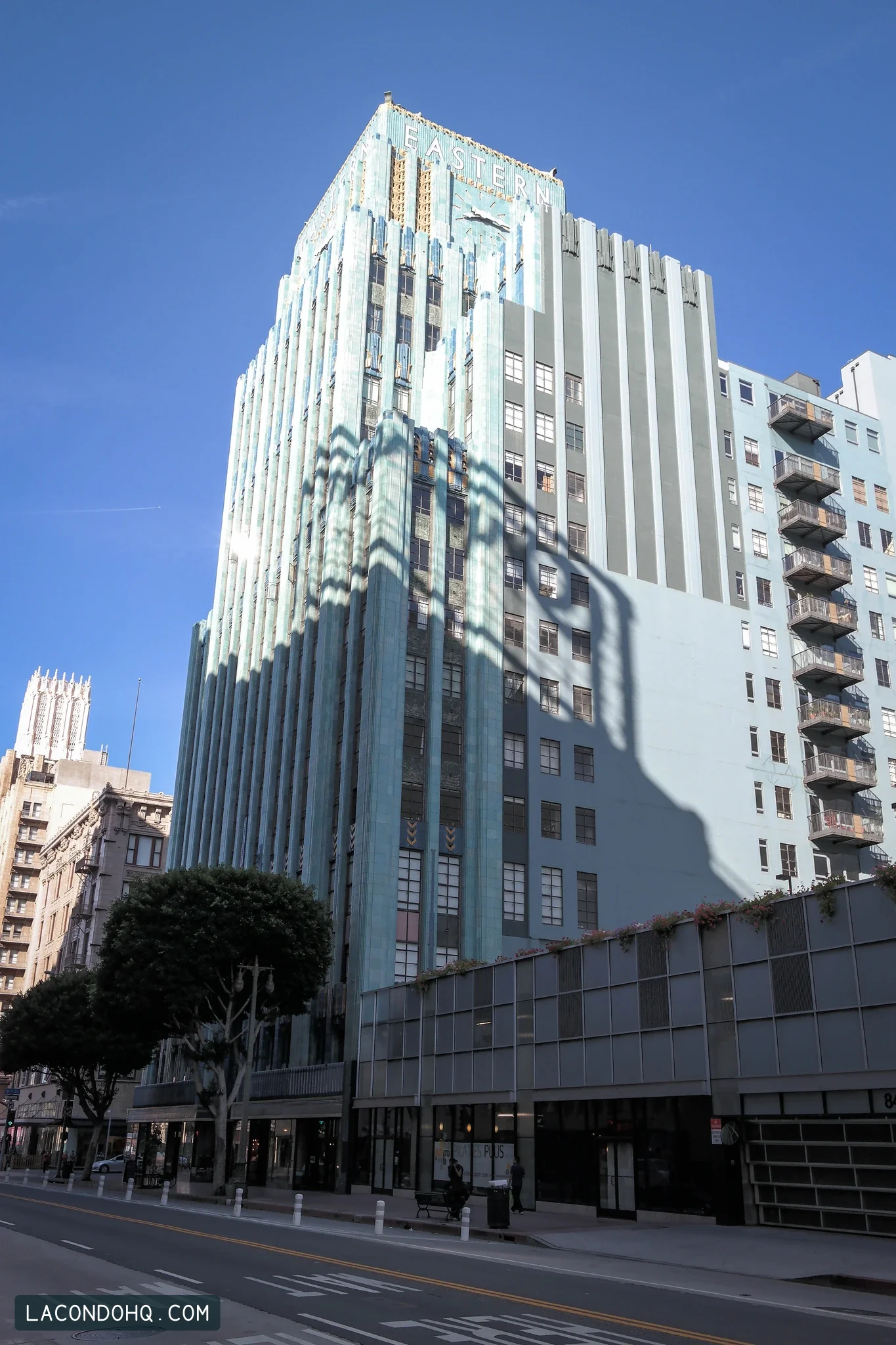
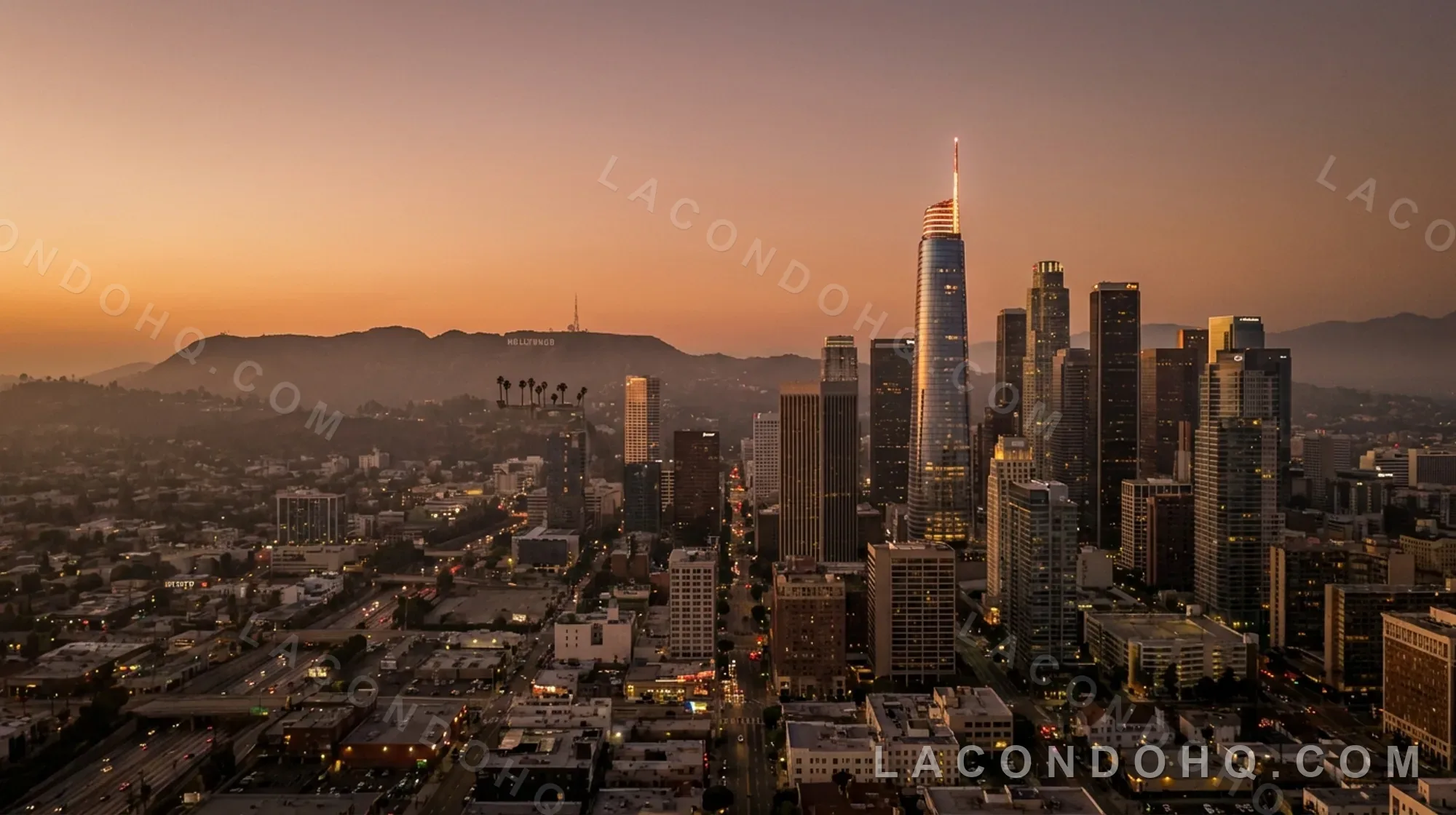
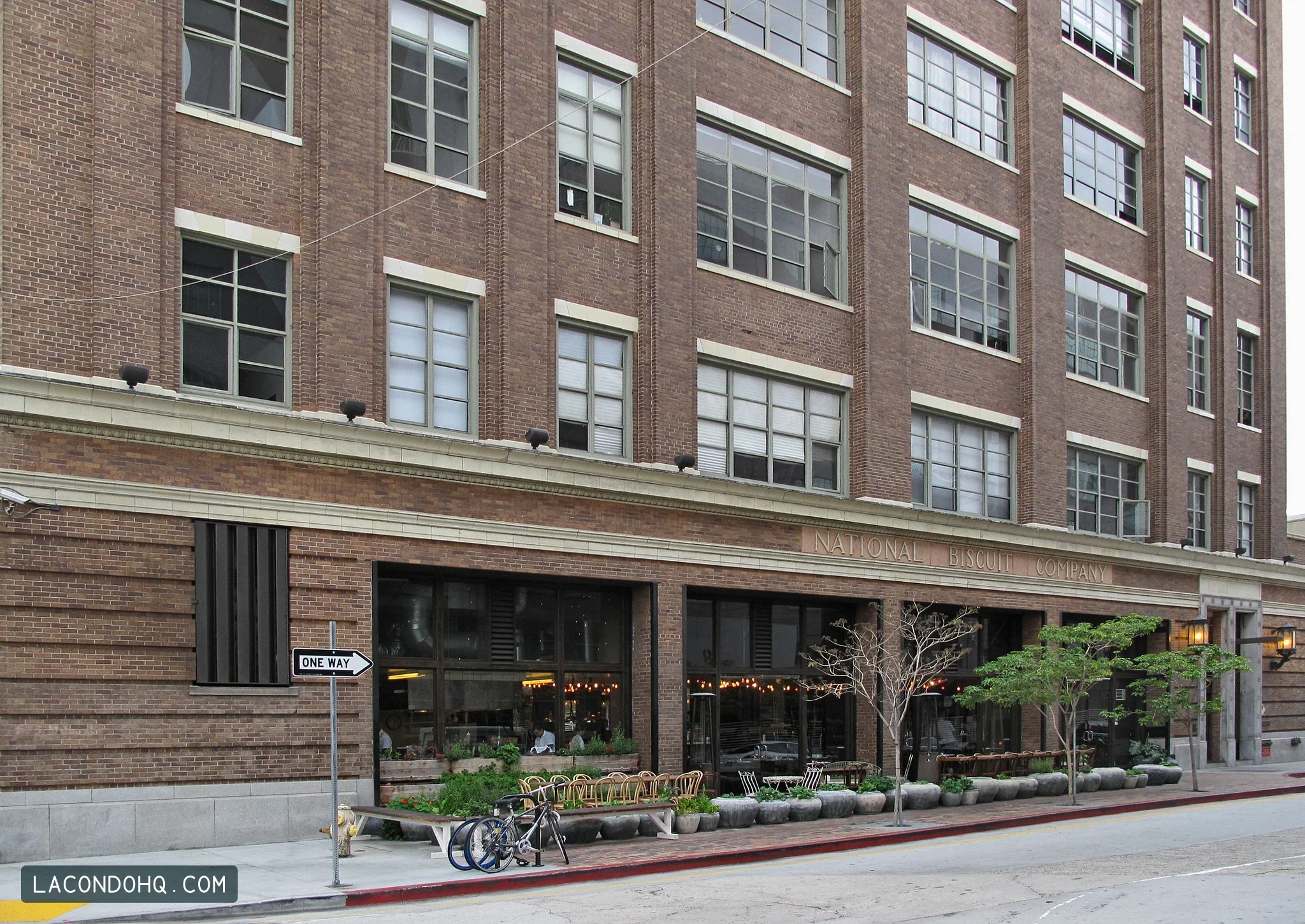
The Historic Core, around Spring Street and Broadway, is the early-1900s heart of the market: ornate office and department-store conversions, including the turquoise Art Deco landmark Eastern Columbia Building on Broadway. The Arts District, east of the core along the river, trades height for space — former factories and warehouses like the Toy Factory Lofts and Biscuit Company Lofts on Industrial Street and Barker Block on Hewitt — surrounded by the galleries, breweries and destination dining our Downtown guide describes. South Park, near Crypto.com Arena and L.A. LIVE, is the glass-tower district, where loft-style open plans appear inside newer construction. Same downtown, very different daily textures: decide whether you want streetcar-era streets, warehouse quiet, or stadium-district energy before you tour.
Why the conversions exist at all
Downtown emptied out as offices moved west in the late twentieth century, leaving blocks of architecturally serious buildings without tenants. The adaptive-reuse ordinance, adopted at the end of the 1990s, streamlined converting them to housing, and developers followed — which is why DTLA's loft supply is deep rather than boutique. For buyers the history matters practically: these are old structures renovated at different times to different standards. Two brick conversions a block apart can differ enormously in seismic retrofit quality, plumbing age and soundproofing. The building's conversion date and renovation history belong in your first round of questions, not your last.
Mills Act buildings and the tax angle
Some of Downtown's designated historic buildings participate in the Mills Act, a California program under which owners of qualifying historic properties can receive significant property-tax reductions in exchange for preservation obligations. In participating loft buildings, that saving materially changes monthly carrying cost. But participation is building-specific, contracts carry conditions, and status should be verified with the county assessor and the HOA rather than taken from a listing remark. If two comparable lofts differ oddly in asking price, a Mills Act contract on one of them is a common explanation.
Loft-specific due diligence
Beyond the standard condo review, lofts add their own checklist. Live/work zoning in some conversions affects use and occasionally financing. Owner-occupancy ratios and HOA financial health drive which loans are available in a given building — worth confirming with your lender early. Open plans mean your neighbor's floor is your ceiling with less between them, so ask about soundproofing and house rules on flooring. Parking is deeded in some buildings, leased or absent in others, and it moves value significantly downtown. And as in any older building, the reserve study and assessment history tell you whether the association is maintaining a century-old structure honestly or deferring it onto future owners.
Where the value sits
Our Downtown research has DTLA among LA's best price-per-square-foot values for this caliber of housing, with soft stretches creating genuinely buyer-favorable windows — but numbers age quickly, so treat our live market report at /market-stats as the source of truth. The durable statement is about supply: nobody is building more 1920s bank buildings. The character stock is finite, the districts around it keep maturing, and buyers who choose a well-run building in the pocket that fits their life tend to be glad they did. Our directory profiles the loft buildings across all three districts when you are ready to compare specific addresses.
Questions buyers ask about Downtown LA lofts
Are Downtown LA lofts real conversions?
Yes — banks, department stores, garment showrooms and warehouses converted into housing, with the brick, timber and concrete to prove it. The conversions happened at scale because of the city's adaptive-reuse ordinance, adopted at the end of the 1990s, which streamlined turning obsolete commercial buildings into residences. That is why the loft supply here is deep rather than boutique.
How do the loft districts differ?
Three personalities. The Historic Core around Spring Street and Broadway is the early-1900s heart, with ornate office and department-store conversions including the turquoise Art Deco Eastern Columbia Building. The Arts District east of the core trades height for space, in former factories and warehouses like the Toy Factory Lofts, Biscuit Company Lofts and Barker Block. South Park near Crypto.com Arena is the glass-tower district, where loft-style open plans appear inside newer construction.
What is the Mills Act and how does it affect price?
A California programme under which owners of qualifying historic properties can receive significant property-tax reductions in exchange for preservation obligations. In participating loft buildings that saving materially changes monthly carrying cost — so if two comparable lofts differ oddly in asking price, a Mills Act contract on one is a common explanation. Participation is building-specific and should be verified with the county assessor and the HOA rather than taken from a listing remark.
What diligence do lofts need beyond a standard condo review?
Live/work zoning in some conversions affects use and occasionally financing. Owner-occupancy ratios and HOA financial health drive which loans are available, so confirm with your lender early. Open plans mean your neighbour's floor is your ceiling with less between them, so ask about soundproofing and house rules on flooring. Parking is deeded in some buildings, leased or absent in others, and it moves value significantly downtown.
Why do two similar-looking conversions differ so much?
Because these are old structures renovated at different times to different standards. Two brick conversions a block apart can differ enormously in seismic retrofit quality, plumbing age and soundproofing, so the building's conversion date and renovation history belong in your first round of questions rather than your last.

Written by
LA Condo HQ
Real-estate research publisher
LA Condo HQ is published by Eltherion, LLC to help readers research Los Angeles buildings, neighborhoods and real-estate decisions. We publish source notes, ownership guides and practical tools, and help readers request introductions to licensed partner agents. We are not a licensed brokerage.