
Current numbers, October 6, 2026
Condos listed on the MLS right now, refreshed every six hours.
| Neighborhood | For sale | Median asking | Median $/sq ft | For rent | Median rent |
|---|---|---|---|---|---|
| Westwood | 115 | $1.09M | $737 | 98 | $5,287/mo |
| Century City | 49 | $2.19M | $1,164 | 22 | $12,750/mo |
Medians appear only when enough listings publish the figure; a dash means too few to report. Full neighborhood reports
Neighbors on the Wilshire Corridor, Not Twins
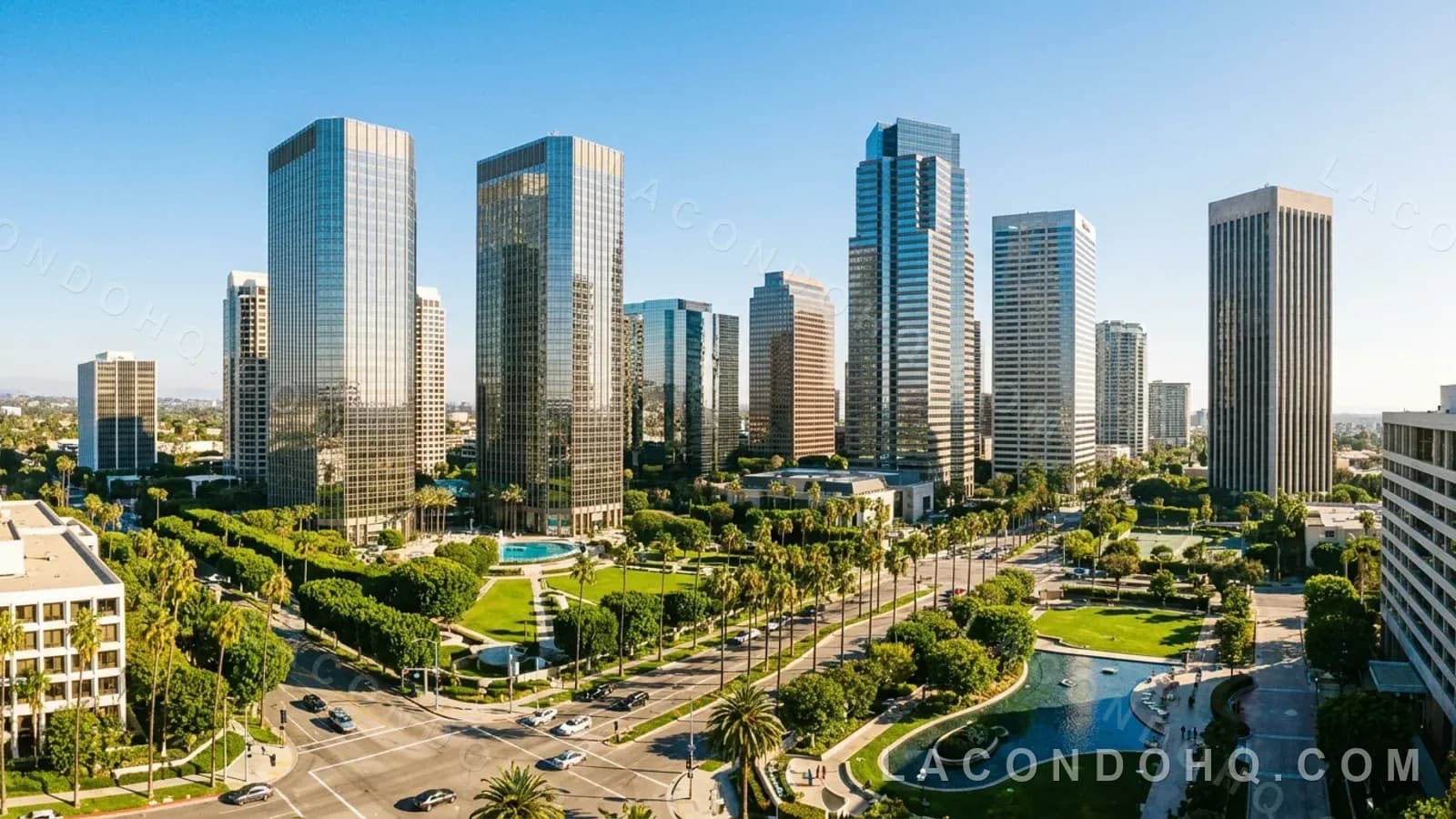
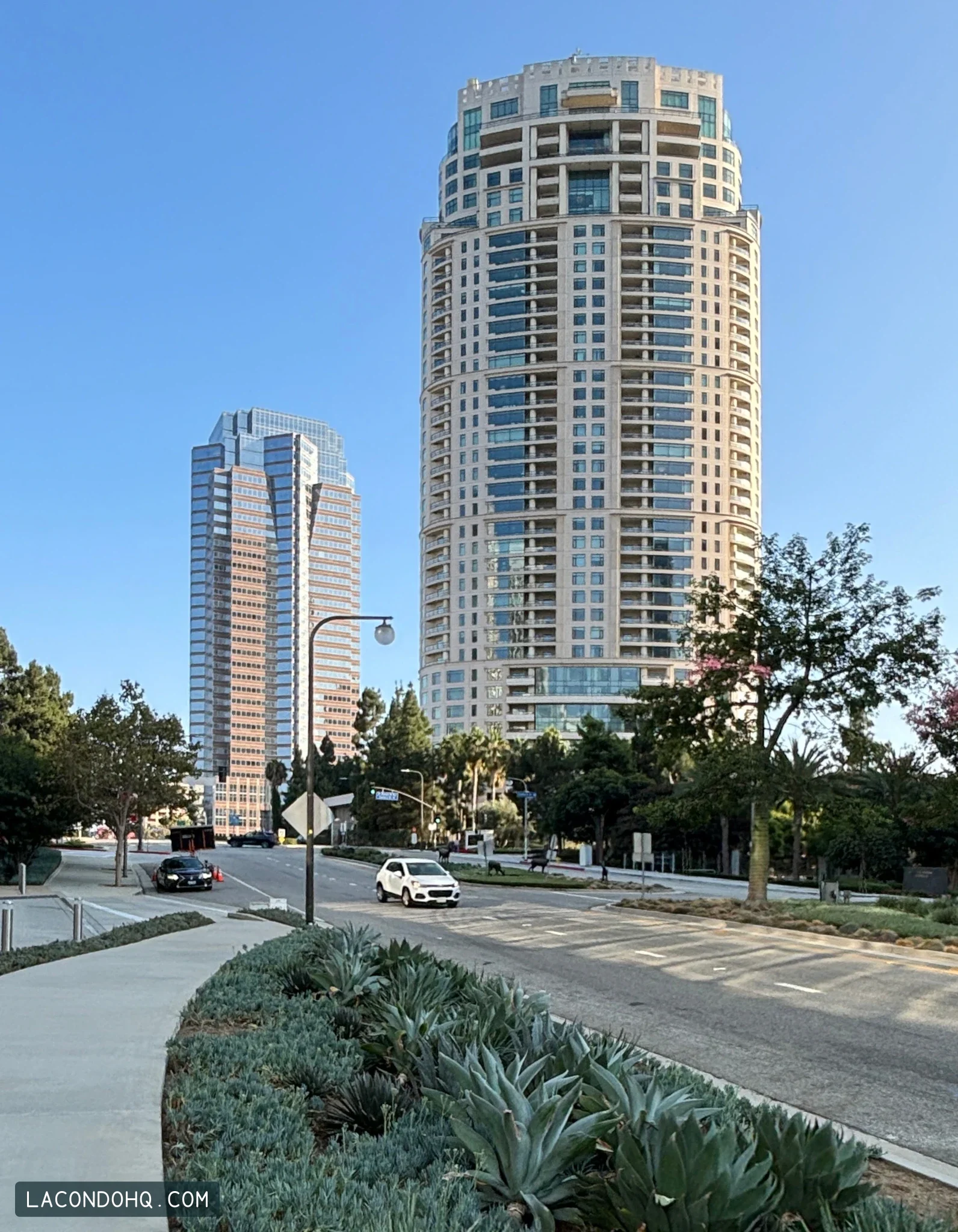
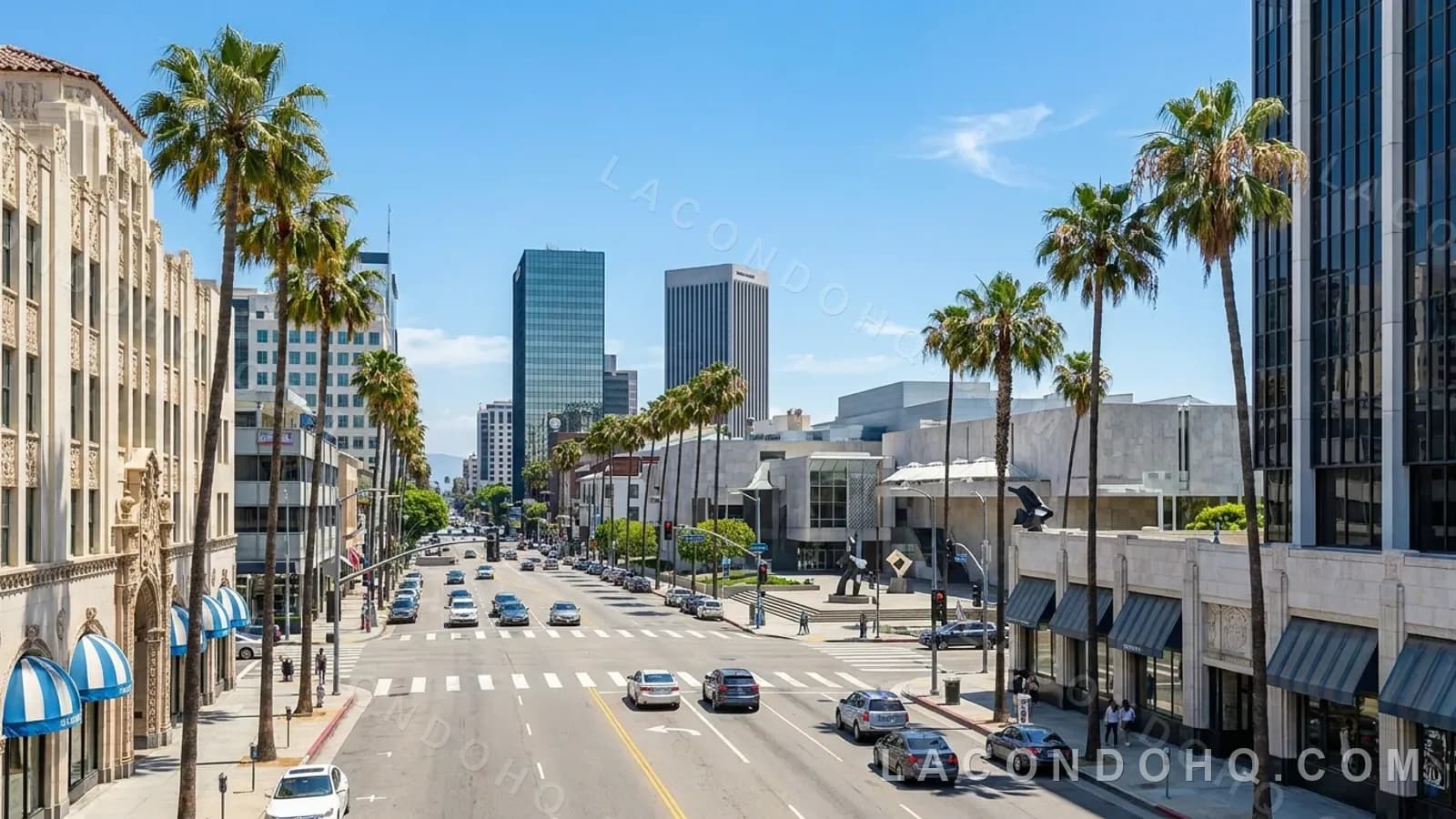
Westwood and Century City sit side by side on the Westside, close enough to share a slice of Wilshire Boulevard and a zip-code border, yet they ask very different things of a condo buyer. Westwood, anchored by UCLA and historic Westwood Village, blends college-town energy with the high-rise glamour of the Wilshire Corridor, the wall of full-service towers locals call Millionaires' Mile. Century City, a short drive east, is a planned high-rise district built on the former 20th Century Fox backlot, where glass office towers and luxury condominiums cluster around the Westfield Century City mall. Both put you minutes from Beverly Hills, Brentwood, and the 405, with Santa Monica's beaches a quick run west. The question is not which is nicer. It is which trade-offs suit you.
Reading the Price Gap Between Westwood and Century City
The clearest divide is price. As of September 26, 2026, the median asking price on condo listings in Westwood was about $1.19 million, roughly $747 per square foot (/market-reports/westwood). Century City's median asking price was about $2.25 million, roughly $1,179 per square foot (/market-reports/century-city). In other words, Century City asks meaningfully more for the same interior footage, a premium of close to sixty percent per square foot on those figures. Both neighborhoods span a wide range, from units asking in the $400,000s to trophy floors above $10 million, so the median tells you more than the extremes. These are asking prices on listings published on LA Condo HQ, not closed sales. Prices move, and any given building carries its own history, so confirm current medians and active pricing before you set a budget; the citywide picture is at /market-stats.
Inside the Full-Service Tower Promise
When comparing Westwood and Century City, separate the exact condominium purchase from nearby rental alternatives. Services and recurring charges vary by property, and a lobby or amenity list does not establish the cost of ownership. Ten Thousand’s official site directs inquiries to a leasing office, so it should not be used to illustrate condominium HOA dues. Request the adopted budget and unit charge schedule for each residence offered for sale.
Selection in Westwood, Scarcity in Century City
Inventory is where the two diverge most quietly. On September 26, 2026, LA Condo HQ showed 117 Westwood condos listed for sale against 44 in Century City, and our building directory profiles about 60 Westwood condo buildings against about 22 in Century City. Practically, Westwood gives you more shots on goal: more floor plans, more price points, more chances to find a corner unit at the height you want. Century City concentrates its value in a smaller set of highly recognizable addresses, which can mean waiting for the right line in the right tower to come available. If you value choice and negotiating room, Westwood's depth helps. If you have a specific building in mind, Century City rewards patience. Live counts shift weekly, so check each neighborhood's market report for the current picture.
The California Condo Documents That Decide the Deal
Whichever neighborhood wins, California law hands you tools to protect the purchase. Common-interest developments here fall under the Davis-Stirling Act, which entitles a buyer to a defined packet before closing: the CC&Rs, bylaws, the association's operating budget, the reserve study, and recent meeting minutes. Read them. In full-service towers, the reserve study matters enormously, because it signals whether the association is funding future roof, elevator, garage, and facade work or setting up a special assessment down the road. Confirm the master insurance policy and plan on your own walls-in HO-6 unit policy, which covers what the association's blanket coverage does not. High dues are easier to accept once the documents show where the money goes.
Which Buyer Belongs Where
Westwood tends to fit buyers tied to UCLA and the Ronald Reagan UCLA Medical Center, members of the established Persian-American community along Westwood Boulevard, and anyone who wants genuine walkability plus a wider, relatively more attainable range of condos. Century City tends to fit executives, entertainment-industry professionals, downsizers leaving Beverly Hills, and international owners who prize security, one-step access to top-tier shopping, and a marquee address, and who are comfortable paying for it. Neither is a mistake. Westwood trades some polish for energy, selection, and price; Century City trades breadth for concentration, service, and prestige. Tour a few buildings in each, put the dues and reserves side by side, and let the documents, not the lobby, make the call.
Questions buyers ask about Westwood and Century City
How much more expensive is Century City?
Meaningfully. As of September 26, 2026, the median asking price on condo listings in Westwood was about $1.19 million, roughly $747 per square foot, against about $2.25 million and roughly $1,179 per square foot in Century City, a premium of close to sixty percent per square foot. These are asking prices on listings published on LA Condo HQ, not closed sales.
Which has more to choose from?
Westwood, by a wide margin. On September 26, 2026, LA Condo HQ showed 117 Westwood condos listed for sale against 44 in Century City, and our building directory profiles about 60 Westwood condo buildings against about 22 in Century City. Westwood gives you more floor plans, more price points and more chances to find a corner unit at the height you want; Century City concentrates its value in a smaller set of highly recognisable addresses.
What are the HOA dues like in each?
Not cheap in either. In Westwood's Corridor buildings monthly dues commonly run from about $1,200 to $3,500 or more, and Century City's flagship towers routinely climb into the thousands. Two units with similar sticker prices can carry very different monthly costs, so weigh dues as seriously as purchase price.
Which Century City buildings can I research?
Start with the individual profiles for The Century, Century Hill and Century Woods and verify the exact property being offered. Ten Thousand is a managed rental alternative with a leasing office, not a condominium purchase example in this guide.
Who does each neighborhood suit?
Westwood tends to fit buyers tied to UCLA and the Ronald Reagan UCLA Medical Center, members of the established Persian-American community along Westwood Boulevard, and anyone who wants genuine walkability plus a wider, relatively more attainable range of condos. Century City tends to fit executives, entertainment professionals, downsizers leaving Beverly Hills and international owners who prize security, one-step access to top-tier shopping and a marquee address.
Sources and review scope
Sources checked 2026-09-06. The notes identify which facts each publication supports.
- Published property identity — Ten Thousand
Ten Thousand’s official contact publication gives 10000 Santa Monica Boulevard and explicitly identifies a leasing office, scheduled tours and rental inquiries.

Written by
LA Condo HQ
Real-estate research publisher
LA Condo HQ is published by Eltherion, LLC to help readers research Los Angeles buildings, neighborhoods and real-estate decisions. We publish source notes, ownership guides and practical tools, and help readers request introductions to licensed partner agents. We are not a licensed brokerage.

,_Avenue_of_the_Stars_(Century_City)_Sept._2024.jpg)