Current numbers, October 26, 2026
Condos listed on the MLS right now, refreshed every six hours.
| Neighborhood | For sale | Median asking | Median $/sq ft | For rent | Median rent |
|---|---|---|---|---|---|
| Venice | 14 | $1.47M | $1,040 | 44 | $4,628/mo |
| Santa Monica | 162 | $1.29M | $974 | 146 | $4,997/mo |
| Marina del Rey | 12 | $1.25M | $808 | 2 | — |
Medians appear only when enough listings publish the figure; a dash means too few to report. Full neighborhood reports
In the City of Los Angeles, short-term rentals are legal only in your primary residence, only after you register with the city, and only for 120 days a year unless you obtain extended approval. Rent-stabilized units are excluded outright. And California law still lets your homeowners association ban stays under 30 days.
Three separate permissions, not one
Owners usually ask this as a single question, and it is three. The city decides whether short-term rental is permitted at your address at all. The association decides whether it is permitted in your building. Your lender and your insurer may each have a view about a unit operated as transient lodging.
A yes from any one of them is not a yes. The most common expensive mistake in this market belongs to the owner who registers with the city, receives a valid registration number, starts hosting, and then learns the governing documents carry a 30-day minimum lease provision that the registration has no power to override.
Work through them in the order below, because the cheapest one to check is also the one most likely to stop you.
What the Home-Sharing Ordinance actually requires
Los Angeles adopted its Home-Sharing Ordinance in December 2018. It took effect on July 1, 2019, and the city began enforcing it that November. It sits in the municipal code at section 12.22 A.32 and governs any rental of a residential unit for fewer than 30 consecutive days.
Four requirements matter to a condo owner. Home-sharing is permitted only in your primary residence, meaning the home you actually occupy for more than six months of the year. You must register with the city and receive a registration number before listing, and that number has to appear in the listing itself. Hosting is capped at 120 days per calendar year unless you apply for and receive Extended Home-Sharing approval, which is a separate and higher bar. Transient occupancy tax applies to the stays.
The primary-residence rule is the structural one. It means a condo bought purely as a nightly-rental investment, a unit nobody lives in, is not eligible under the ordinance at any day count. Fees, renewal terms and the extended-approval process change over time, so confirm the current terms with the city rather than with a booking platform's help page.
Why rent-stabilized units are carved out
Units subject to the Rent Stabilization Ordinance are not eligible for home-sharing. The reasoning is direct. The ordinance exists to protect long-term rental stock, and turning a rent-stabilized unit into nightly lodging removes it from that stock.
This catches more condo owners than expect it. RSO coverage in Los Angeles generally turns on a building's age and type rather than on whether the units are individually owned, so an owner in an older converted building can find their unit is covered. Our guide at /blog/renting-out-an-la-condo-rso-permits works through how that status is determined and what it means for a conventional tenancy.
Check the status before you plan around it rather than after.
The HOA layer, where AB 3182 does not help
California passed Assembly Bill 3182 in 2020, and the resulting Civil Code section 4741 limits how far an association may restrict rentals. It voids rental caps below 25 percent of units and bars associations from prohibiting rentals outright. Owners often hear that and assume it settles short-term rentals too.
It does not. The statute expressly preserves an association's ability to prohibit rentals of 30 days or fewer. That carve-out is the most important sentence in this article for a condo owner: the law that opened up long-term rentals deliberately left short stays under association control.
A great many Los Angeles associations use it. A 30-day minimum lease term in the governing documents, a rule against transient occupancy, or a registration requirement for any tenancy are all common, and all enforceable against a unit that holds a valid city registration. Our fuller treatment of the statute is at /blog/la-condo-hoa-rental-restrictions-ab-3182.
Read the governing documents and the current rules rather than a board member's recollection. Amendments and rule changes are where minimum-stay provisions usually live, and they are the documents most often missing from a resale package.
Los Angeles is several cities, and they do not agree
The Home-Sharing Ordinance is a City of Los Angeles law. A large share of what people mean by Los Angeles is not governed by it.
Santa Monica, West Hollywood, Beverly Hills and Culver City are separate incorporated cities, each with its own short-term rental law. Unincorporated Los Angeles County, which includes Marina del Rey, follows county rules instead. Several of these regimes are materially stricter than the city ordinance, and some prohibit whole-unit short-term rental in residential zones altogether.
So the first question is jurisdictional: which city is the unit actually in? A Venice condo sits in the City of Los Angeles and the ordinance applies. A condo a short distance west in Santa Monica does not, and a different law governs it. Our profiles at /neighborhoods/venice, /neighborhoods/santa-monica and /neighborhoods/marina-del-rey give the geography, but the controlling answer comes from that jurisdiction's own planning department for the specific parcel.
Do not reason from a neighborhood name. Reason from the address.
What this does to the underwriting
For an owner running numbers, the ordinance changes the shape of the return rather than merely trimming it.
A 120-day cap inside a primary residence is not a business. It is supplemental income on a home you live in. Revenue is bounded by the cap, the eligible nights are the ones you are not using the home yourself, and the operating costs of furnishing, cleaning, turnover, platform fees and transient occupancy tax are carried across a third of the year at most.
That is why most Los Angeles condo owners who model both paths land on a conventional lease. A tenancy of 30 days or longer sidesteps the ordinance, sidesteps the typical association prohibition, and produces a predictable monthly figure. Current asking rents across our tracked buildings sit at /condos-for-rent, the citywide rental picture at /rental-market, and dated sale figures at /market-stats.
If short-term income is the reason you are buying, confirm eligibility before you remove contingencies, not after.
Questions LA condo owners ask about short-term rentals
Can I rent my Los Angeles condo on Airbnb for fewer than 30 days?
Only if the unit is your primary residence, you have registered with the City of Los Angeles and received a registration number, the unit is not rent-stabilized, and your association permits stays that short. All four have to be true at once.
How many days a year can I host?
The Home-Sharing Ordinance caps hosting at 120 days per calendar year. Exceeding that requires a separate Extended Home-Sharing approval from the city, which carries additional requirements and its own fee.
Can my HOA ban short-term rentals even though AB 3182 exists?
Yes. Civil Code section 4741 restricts rental prohibitions and caps, but it expressly does not stop an association from prohibiting rentals of 30 days or fewer. A city registration number does not override the governing documents.
Does the ordinance apply if my condo is in Santa Monica or West Hollywood?
No. Those are separate cities with their own short-term rental laws, as are Beverly Hills and Culver City, and unincorporated county areas such as Marina del Rey follow county rules instead. Check the jurisdiction the parcel actually sits in.
Can I home-share a condo I bought purely as an investment?
No. The ordinance permits home-sharing only in a primary residence, defined as the home you occupy more than six months of the year. A unit nobody lives in is not eligible at any number of days.
What we can and cannot tell you
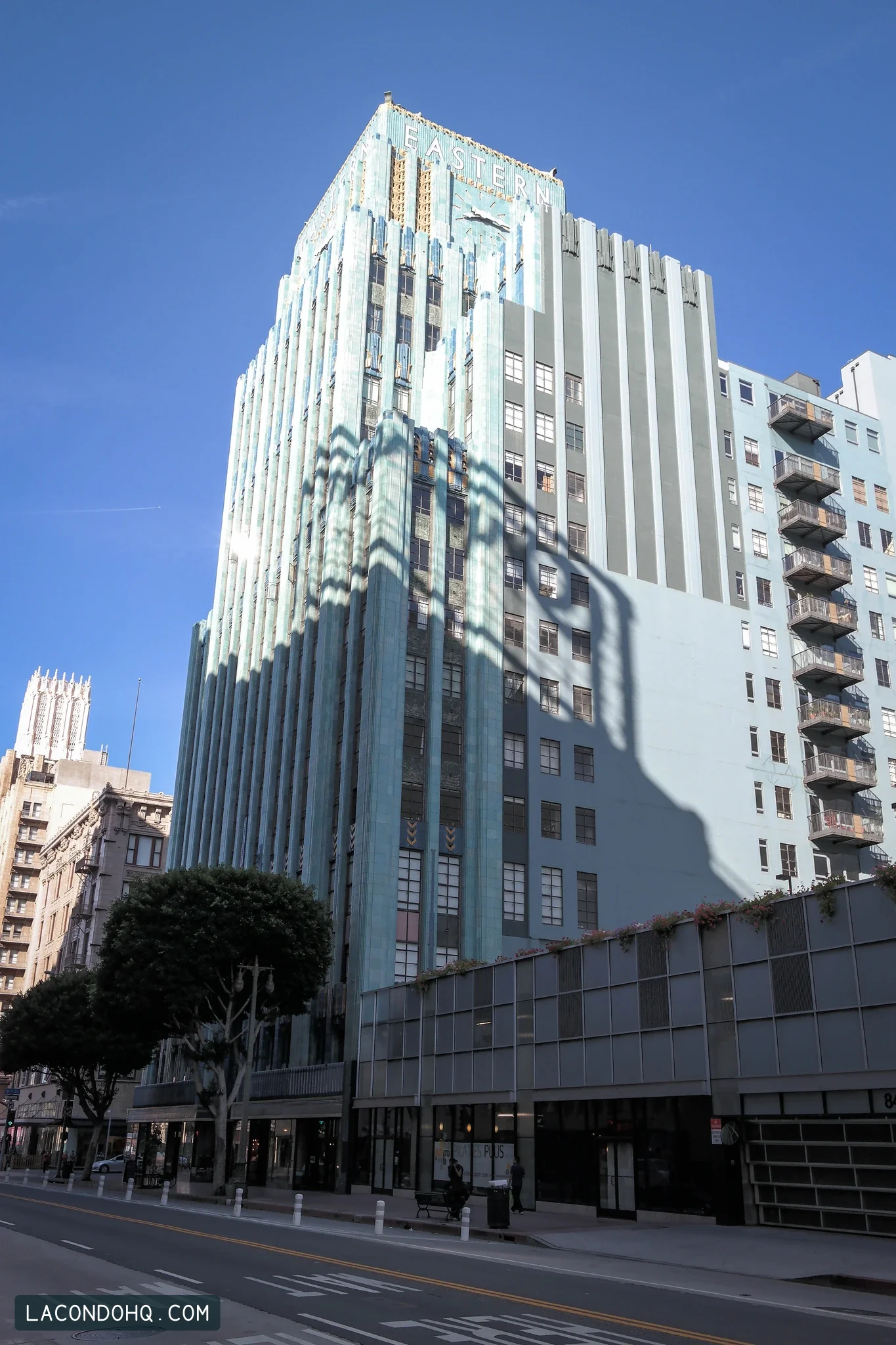
Our directory is a starting point for building research, not evidence that short-term rental is permitted. The retained profile at /buildings/eastern-columbia-building can help identify an address, but a prospective host still needs the applicable building and city records. Pacific Electric Lofts is identified in its owner’s apartment portfolio and should not be assumed to offer condominium purchases.
Ordinance terms, fees and approval processes change, and this is general information rather than legal advice. Confirm the current rules with the jurisdiction, and read the association's governing documents with a California real estate attorney, before relying on either.
We are a research and listings platform, not a brokerage. We do not list on the MLS, negotiate offers or close transactions. When you want a specific building's governing documents and rental rules read before you commit, we introduce you to a licensed partner agent.
Sources and review scope
Sources checked 2026-09-06. The notes identify which facts each publication supports.
- Published property identity — Pacific Electric Lofts
Essex Property Trust’s first-quarter 2026 property list includes Pacific Electric Lofts at 610 South Main Street among its apartment communities. This is current owner-issued portfolio evidence, independent of assessor classification.
- Los Angeles City Planning — Home-Sharing
The city's Home-Sharing program page: eligibility is restricted to hosts' primary residences, hosts must register and display the registration number on every listing, and Regular and Extended registrations are available.
- California Civil Code § 4741
Bars governing documents that prohibit rentals or cap them below 25 percent of units, and expressly preserves an association's power to prohibit transient or short-term rentals of 30 days or less.
Written by
Publisher and editor, LA Condo HQ
LA Condo HQ is published by Eltherion, LLC. This article is not reviewed by a licensed real estate agent or broker and is not professional advice.