

Current numbers, October 3, 2026
Condos listed on the MLS right now, refreshed every six hours.
| Neighborhood | For sale | Median asking | Median $/sq ft | For rent | Median rent |
|---|---|---|---|---|---|
| Downtown LA | 333 | $589K | $614 | 169 | $3,200/mo |
| Koreatown | 124 | $692K | $595 | 188 | $2,593/mo |
| Hollywood | 70 | $686K | $593 | 101 | $4,050/mo |
Medians appear only when enough listings publish the figure; a dash means too few to report. Full neighborhood reports
No. Since January 1, 2021, California's Civil Code section 4741 — added by AB 3182 — bars a condo association from prohibiting rentals outright or capping them below 25 percent of the separate interests. Associations may still ban rentals shorter than 30 days, and may still cap leasing at or above that 25 percent floor.
What AB 3182 changed on January 1, 2021
Before 2021, California condo associations had wide latitude to write leasing out of the building. Some declarations banned rentals entirely; others set caps so low that an owner who bought expecting to lease could sit on a waiting list indefinitely.
AB 3182 closed that. The bill added Civil Code section 4741, which provides that an owner of a separate interest in a common interest development is not subject to a governing-document provision that prohibits, has the effect of prohibiting, or unreasonably restricts the rental or leasing of that separate interest. It reaches declarations, bylaws and operating rules alike, and it applies to how an association behaves as well as to what its documents say — a rule that is technically silent but administered as a ban is still a ban.
The statute also set a deadline for associations: they had to amend their governing documents to conform by December 31, 2021, and give members general notice. Some never did, which is why an unenforceable clause can still sit in a CC&R book handed to a buyer in 2026.
The 25 percent floor, and what counts toward it
The number buyers actually need is 25 percent. An association may not adopt or enforce a provision restricting rentals to fewer than 25 percent of the separate interests in the development. A cap at 25 percent is lawful. A cap at 10 percent is not, whatever the recorded declaration still says.
Two details change the arithmetic. Accessory dwelling units and junior accessory dwelling units are not counted as separate interests for this purpose. And the floor is a floor, not a target: nothing requires an association to allow more than a quarter of its units to be leased, and a building already at its cap will run a waiting list that is entirely lawful.
That is the practical trap. "The HOA cannot ban rentals" and "you can rent your unit this year" are different sentences. Ask where the building stands against its cap, in writing, before you remove a contingency.
The 30-day carve-out is the one real ban left
Section 4741 expressly preserves an association's power to prohibit transient and short-term rentals of 30 days or less. That carve-out is why many Los Angeles buildings you look at will have a 30-day minimum lease term, and why the minimum is enforceable even though a blanket rental ban is not.
Layer the city on top. Los Angeles regulates short stays separately through home-sharing rules that turn on primary residence and registration, and a building's own 30-day minimum can bind you even where the city would allow a registered short-term rental. The city-side permits and landlord math are at /blog/renting-out-an-la-condo-rso-permits.
Grandfathering, and why an old clause may still bind someone
Civil Code section 4740 is the older provision and it works from the other direction: it protects an owner from a rental prohibition that became effective after that owner acquired title. A restriction adopted while you already owned the unit generally does not reach you.
Read together, the two sections mean a single building can hold owners on different footings, and that the date a clause took effect matters as much as its text. Ask the association which provisions it currently enforces, and whether it adopted the conforming amendment the statute required.
What a rental cap costs you in today's LA market
The income at stake is real. Our rental report at /rental-market puts the median Los Angeles condo asking rent at $3,900 a month — a median of $4.00 per square foot per month across 1,930 active rental listings, at a median listed size of 1,160 square feet, as of August 20, 2026, computed from the live CRMLS feed. The same report shows a median of $2,850 for one-bedroom listings and $4,200 for two-bedroom listings.
Set that against acquisition cost. Our market report at /market-stats puts the median LA condo sale price at $865,000, or $688 per square foot, with 1,965 active listings, about 8.5 months of supply and a median 41 days on market as of August 20, 2026, down 1.6 percent year over year.
A year spent on a leasing waiting list is not an inconvenience at those figures. On a unit renting at the median it is roughly $46,800 of gross asking rent not collected, while dues, taxes and debt service run anyway. Whether buying to rent beats renting outright is worked through at /blog/rent-or-buy-la-condo-price-to-rent-2026, and current rental inventory is at /condos-for-rent.
The financing side nobody raises until underwriting
There is a second reason associations care about the leased share. Conventional and FHA project review weigh investor concentration, among other factors, when deciding whether a project is warrantable. A building where a large share of units are leased can be harder to finance, narrowing the buyer pool at resale for every owner in it, including you.
So the 25 percent floor reads as a compromise rather than a gift to investors. What that review does to a specific building is at /blog/non-warrantable-condos-los-angeles.
Reading the documents before you commit
The rules live in three places and they can disagree: the recorded declaration, the bylaws, and the operating rules the board adopts. The seller's disclosure package under Civil Code section 4525 is how you get them, and what it must contain is at /blog/hoa-resale-package-la-condo. The wider statutory frame sits at /blog/davis-stirling-act-la-condo-buyers.
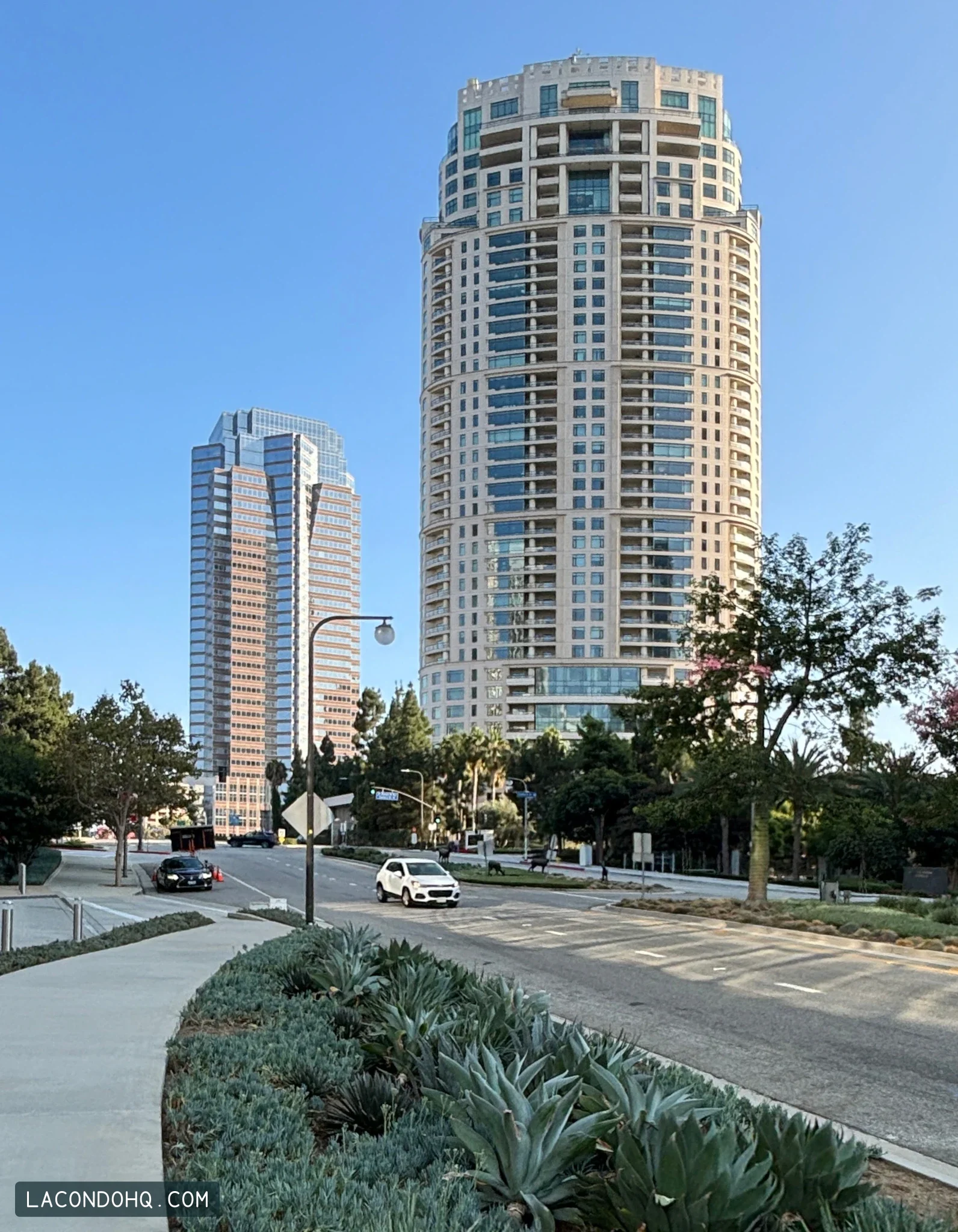
Leasing rules track building type more than they track neighborhood. Larger towers in /neighborhoods/downtown-la and /neighborhoods/koreatown more often run explicit caps and waiting lists, while older Westside stock frequently relies on a minimum lease term alone. Corridor buildings such as /buildings/ten-five-sixty set their own leasing rules, which is why the answer must come from the association rather than a generalization about the area.
Questions LA condo buyers ask about HOA rental restrictions
Can a California HOA ban renting your condo?
No. Civil Code section 4741, added by AB 3182 and effective January 1, 2021, provides that an owner is not subject to a governing-document provision that prohibits, has the effect of prohibiting, or unreasonably restricts the rental or leasing of a separate interest. A ban that predates the law is not enforceable simply because it is still printed in the declaration.
What is the 25 percent rental cap rule in California?
An association may not adopt or enforce a provision restricting rentals to fewer than 25 percent of the separate interests in the development. Caps at or above that level remain lawful, and accessory dwelling units and junior accessory dwelling units are not counted as separate interests for that calculation.
Can an HOA still require a 30-day minimum lease?
Yes. Section 4741 expressly preserves an association's ability to prohibit transient or short-term rentals of 30 days or less, which is the legal basis for the 30-day minimum lease term common in Los Angeles buildings. That is separate from the city's own home-sharing registration rules, and both can apply to the same unit.
Was my association required to update its CC&Rs?
Yes. Associations were required to amend their governing documents to conform to section 4741 by December 31, 2021, and to provide general notice of the amendment to members. Some never did, so an unenforceable clause can still appear in documents handed to a buyer today.
How do I find out whether a building is at its rental cap?
Ask the association or its manager in writing for the current leasing rule, the number of units leased right now, and your position on any waiting list, and get the answer before your contingency period ends. The recorded declaration alone will not tell you where the building stands today.
What to do with this
Read the leasing provision, then ask the association three questions: what the current cap is, how many units are leased against it today, and whether the conforming amendment was adopted. Where the answers and the documents disagree, the gap is the finding.
We are a research and listings platform, not a brokerage, and this is general information rather than legal advice — a leasing question with money on it belongs with a California real estate attorney. We do not list on the MLS, negotiate offers or close transactions. When you want a specific building's governing documents read before you commit, we introduce you to a licensed partner agent.

Written by
LA Condo HQ
Real-estate research publisher
LA Condo HQ is published by Eltherion, LLC to help readers research Los Angeles buildings, neighborhoods and real-estate decisions. We publish source notes, ownership guides and practical tools, and help readers request introductions to licensed partner agents. We are not a licensed brokerage.


,_Avenue_of_the_Stars_(Century_City)_Sept._2024.jpg)