

Current numbers, October 7, 2026
Condos listed on the MLS right now, refreshed every six hours. Figures quoted in the article below are earlier research estimates; use these for current pricing.
| Neighborhood | For sale | Median asking | Median $/sq ft | For rent | Median rent |
|---|---|---|---|---|---|
| Downtown LA | 331 | $589K | $613 | 169 | $3,200/mo |
| Century City | 49 | $2.19M | $1,164 | 22 | $12,750/mo |
| Playa Vista | 34 | $1.23M | $776 | 25 | $4,950/mo |
Medians appear only when enough listings publish the figure; a dash means too few to report. Full neighborhood reports
Property tax is the line item LA condo buyers most often estimate wrong. California does not tax your unit on what it is worth today; under Proposition 13 it taxes what you paid for it, then adds a one-time supplemental bill after closing and, at the high end, a City of Los Angeles transfer tax called Measure ULA. Here is how the three fit together, and where to verify what applies to your deal.
How Prop 13 ties your tax to what you paid
California runs an acquisition-value property tax system under Proposition 13, passed in 1978. Rather than reassessing your condo to current market value every year, the county sets its assessed value when you acquire it; in an ordinary arm's-length sale, that is essentially your purchase price. The base tax rate is 1 percent of that assessed value. On top of the base sit voter-approved add-ons, mostly to repay local general-obligation bonds for schools and infrastructure, which is why a real LA tax bill runs a little above 1 percent. Once set, your value can rise only a capped amount each year for inflation, no more than 2 percent annually, however fast the market climbs. The add-ons vary by parcel, so confirm the exact combined rate with the county or a tax professional.
Why the identical unit down the hall pays less
Because the basis is set at acquisition, two identical condos in one building can carry very different tax bills. A neighbor who bought a decade ago holds a low assessed value that has only crept up by the inflation cap; when you buy today, your basis resets to today's price. That reset is the thing buyers most misunderstand about LA property tax: you do not inherit the seller's Prop 13 basis, and a listing's quoted taxes usually reflect that seller's old, lower assessment, not what you will pay. Estimate your bill from your purchase price and the combined rate, not from the current owner's number.
The supplemental bill that lands after you close
When ownership changes, the assessor reassesses the property and issues a supplemental assessment: the difference between the seller's old assessed value and your new one. This produces a supplemental tax bill, separate from the regular annual bill and prorated for the part of the fiscal year (July 1 through June 30) remaining after you close. Depending on when you buy, you may receive one supplemental bill or two. Here is the trap: these bills are mailed directly to you and are generally not paid from the impound or escrow account your lender set up for the regular installments. Buyers who assume the mortgage covers everything get a real bill weeks or months after moving in. Set money aside for it.
Measure ULA and the City of LA transfer tax
Separate from the annual tax is a one-time tax on the sale itself. Measure ULA, approved by City of Los Angeles voters in 2022 and effective April 2023, taxes high-value real-estate transfers within the city to fund housing and homelessness programs. As enacted it applied 4 percent to transfers at or above $5 million and 5.5 percent at or above $10 million; those thresholds are adjusted for inflation each year, so confirm the current figures with a tax professional or the city. Two features matter most. First, it is a cliff, not a marginal bracket: the rate applies to the entire price, so a sale one dollar over a threshold owes the full percentage on the whole amount. Second, it is customarily paid by the seller and sits on top of the older city and county documentary transfer taxes. Despite its mansion-tax nickname, it covers all property types, not only homes.
Which LA condos actually cross the line
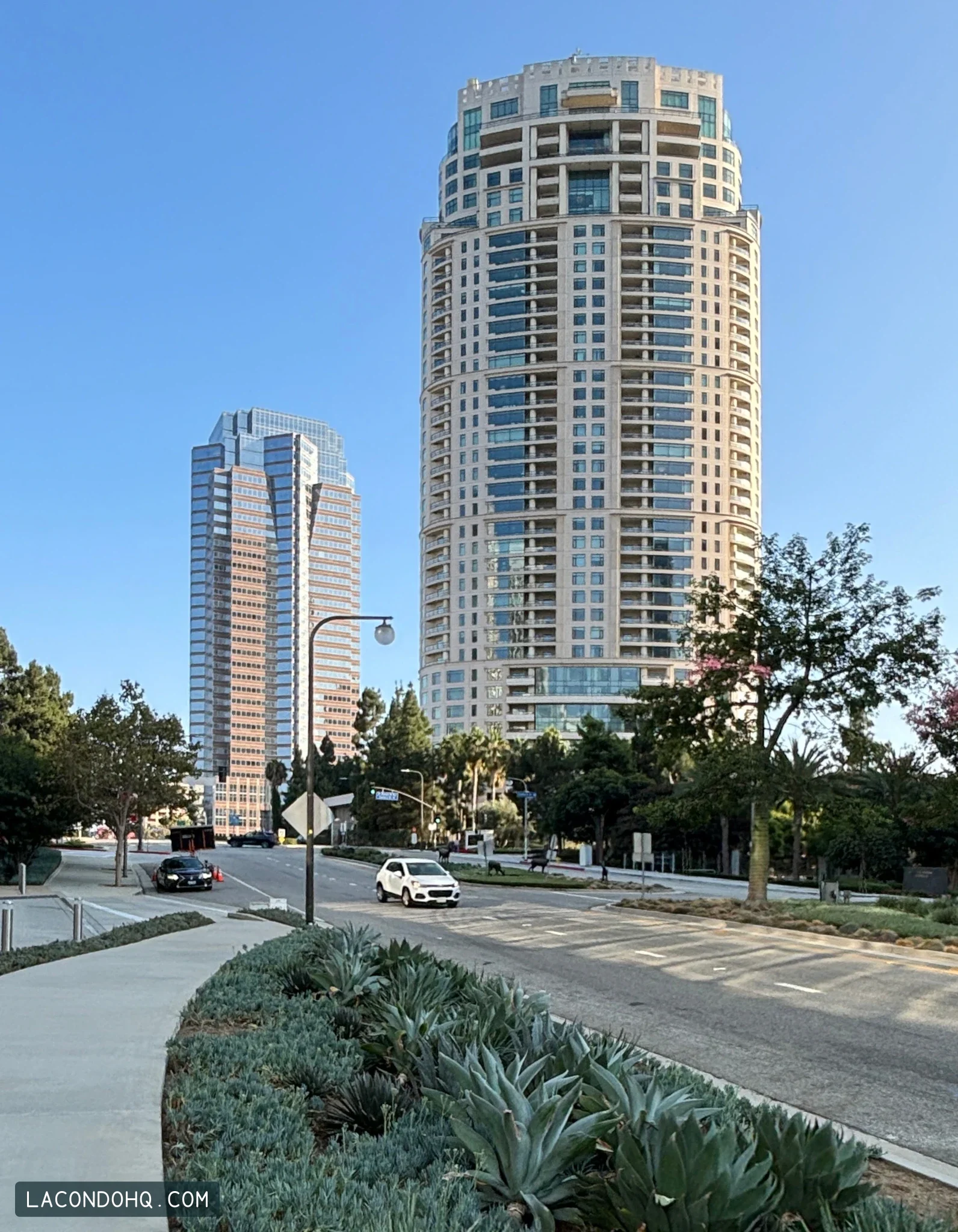
For most condo buyers, ULA is a non-event. As of September 26, 2026, the median asking price on condo listings was about $589,000 in Downtown LA (/market-reports/downtown-la) and about $695,000 in Koreatown (/market-reports/koreatown), both far below the high-value thresholds; the citywide picture is at /market-stats. Where ULA comes into view is the top of the market: Century City's median asking price that day was about $2.25 million (/market-reports/century-city), with individual listings asking up to about $13 million, so a large penthouse can reach ULA territory. Geography matters too, because the tax applies only inside City of Los Angeles limits. Downtown, Westwood, Century City and Playa Vista are in the city; West Hollywood, Beverly Hills and Santa Monica are their own cities, and Marina del Rey is unincorporated county, none of them subject to ULA, though several of those jurisdictions levy their own transfer taxes. Know which city your building sits in.
Downsizers, inheritance and moving your basis
Prop 13 shapes later moves too. Under Proposition 19, homeowners who are 55 or older, severely disabled, or victims of wildfire and other disasters may transfer their existing low assessed value to a replacement primary residence in California, within limits, valuable for a longtime owner downsizing into a Wilshire Corridor or Century City condo who would otherwise reset to a much higher basis. Prop 19 also narrowed the old parent-to-child exclusion, so inherited property is more likely to be reassessed than before. These rules are fact-specific and change; treat them as a reason to call a tax professional early, not a plan you finalize from an article.
Verify the numbers before you write an offer
The county tax bill and preliminary title report show exactly what a parcel pays, including extra line items such as Mello-Roos special taxes in newer master-planned districts. Before you write an offer, pull the actual bill, estimate your reassessed amount from your purchase price and the combined rate, budget for the supplemental bill, and check anything ULA-related if you are shopping at the high end. For current pricing across LA condo neighborhoods, our market report at /market-stats carries the live numbers; for how a bill lands on a specific unit, your escrow officer and a tax professional are the right guides.
Questions buyers ask about LA condo property taxes
How does Proposition 13 set my property tax?
California runs an acquisition-value system: rather than reassessing to market value every year, the county sets your condo's assessed value when you acquire it, which in an ordinary arm's-length sale is essentially your purchase price. The base rate is 1 percent of that value, with voter-approved add-ons on top, and your value can rise only a capped 2 percent annually thereafter however fast the market climbs.
Why does the identical unit down the hall pay less tax?
Because the basis is set at acquisition. A neighbour who bought a decade ago holds a low assessed value that has only crept up by the inflation cap, while your basis resets to today's price when you buy. You do not inherit the seller's Prop 13 basis, and a listing's quoted taxes usually reflect that seller's old, lower assessment rather than what you will pay.
What is the supplemental tax bill?
When ownership changes the assessor reassesses and issues a supplemental assessment — the difference between the seller's old assessed value and your new one — prorated for the part of the fiscal year remaining after you close. The trap is that these bills are mailed directly to you and are generally not paid from the impound or escrow account your lender set up for the regular instalments, so set money aside.
Will Measure ULA apply to my purchase?
For most condo buyers it is a non-event. As enacted it applied 4 percent to transfers at or above $5 million and 5.5 percent at or above $10 million, with thresholds adjusted for inflation each year. It is a cliff rather than a marginal bracket, so a sale one dollar over a threshold owes the full percentage on the whole amount, and it is customarily paid by the seller.
Does Measure ULA apply everywhere in LA?
No — only inside City of Los Angeles limits. Downtown, Westwood, Century City and Playa Vista are in the city; West Hollywood, Beverly Hills and Santa Monica are their own cities, and Marina del Rey is unincorporated county, none of them subject to ULA, though several levy their own transfer taxes. Know which city your building sits in.

Written by
LA Condo HQ
Real-estate research publisher
LA Condo HQ is published by Eltherion, LLC to help readers research Los Angeles buildings, neighborhoods and real-estate decisions. We publish source notes, ownership guides and practical tools, and help readers request introductions to licensed partner agents. We are not a licensed brokerage.



,_Avenue_of_the_Stars_(Century_City)_Sept._2024.jpg)