
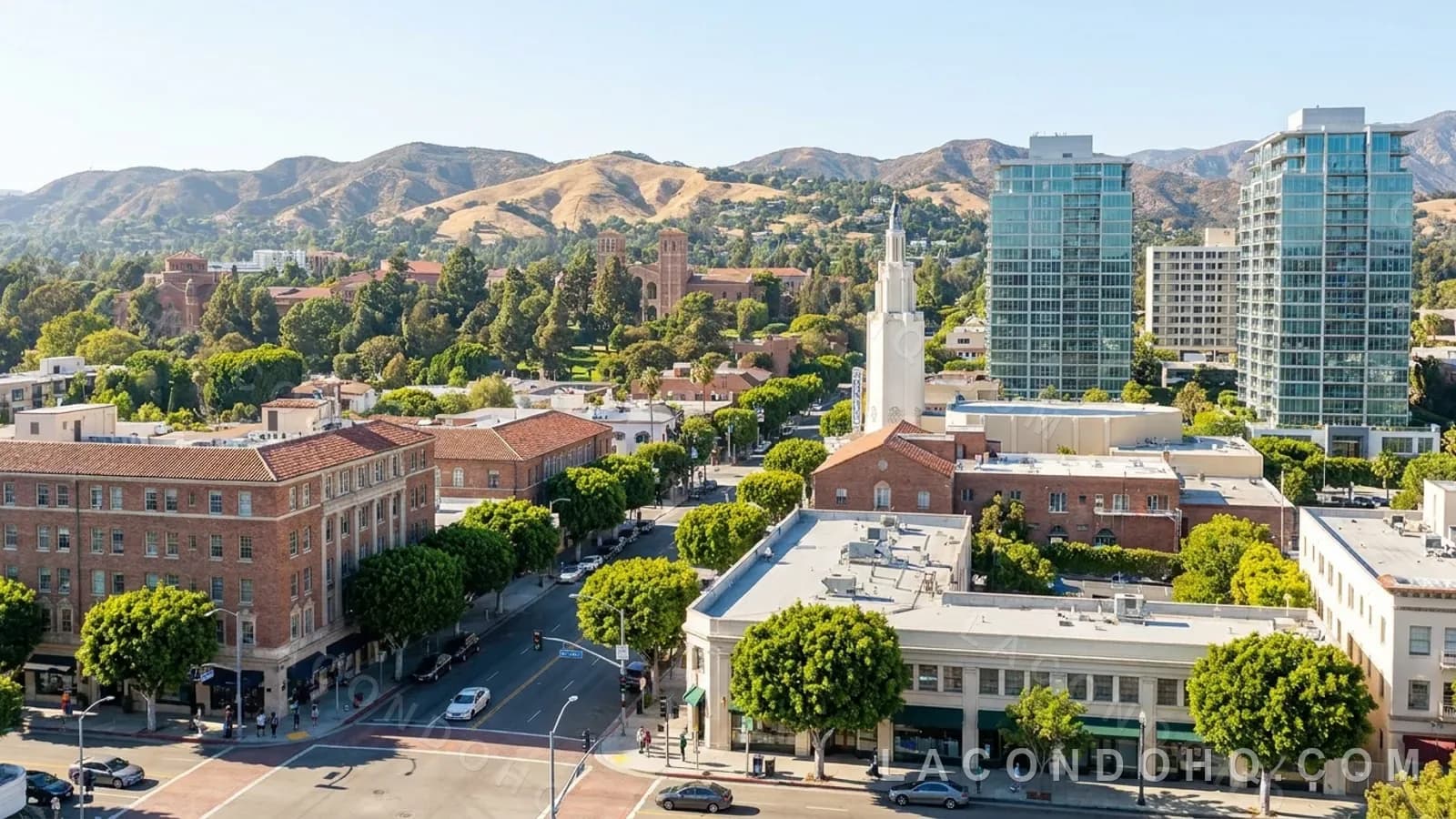
Current numbers, October 6, 2026
Condos listed on the MLS right now, refreshed every six hours.
| Neighborhood | For sale | Median asking | Median $/sq ft | For rent | Median rent |
|---|---|---|---|---|---|
| West Hollywood | 172 | $899K | $834 | 204 | $4,748/mo |
| Westwood | 114 | $1.15M | $735 | 101 | $5,400/mo |
Medians appear only when enough listings publish the figure; a dash means too few to report. Full neighborhood reports
The law is about defined components
California Civil Code 5551 addresses certain exterior elevated elements that a condominium association must maintain or repair. Its definition includes qualifying load-bearing components and associated waterproofing, with walking surfaces more than six feet above ground and support wholly or substantially involving wood or wood-based products. It applies to buildings with at least three attached multifamily dwelling units.
That scope matters. The presence of a balcony does not, by itself, establish applicability. Ask a qualified professional to identify the relevant components, materials and maintenance responsibility for the building you are researching.
Check the inspection history and current report
The statute establishes a nine-year inspection cycle and an initial January 1, 2025 deadline, with a separate timing rule for buildings whose permit applications were submitted on or after January 1, 2020. Local rules can impose greater requirements.
The current law also specifies report details including the inspection date, element counts, sample information and identified immediate threats. It requires a licensed structural or civil engineer or architect to inspect a statistically significant sample. Those are the source facts; this article does not determine compliance for a particular association.
Ask what the report actually covers
Request the report and ask which elements were included, how the sample was selected and what the findings mean for the residence you are considering. A statement that the association had an inspection leaves those questions unanswered.
Have the relevant professional distinguish the inspected elements from other parts of the building. Ask whether any later report, repair record or restriction changes the interpretation. Do not infer that a sampled inspection personally examined each balcony or that it replaces a unit inspection.
Follow findings through to documented action
If the records identify work, ask what was recommended, what was approved and what documentation shows the current status. Request the applicable scope, permits, professional follow-up and association funding records. Keep proposed work separate from completed work in your notes.
An engineering finding and a funding decision are different matters. Ask an engineer or architect to explain condition and technical scope, and ask management to identify the budget or assessment documents. An attorney can advise on legal requirements and the effect of those records on your purchase.
Avoid importing a different building’s deadline
California has different inspection provisions for different property contexts. Do not take a deadline from a rental-building article and assume it governs a condominium association under Civil Code 5551. Start with the property type and the relevant current law.
Use /research/condo-document-checklist to organize the documents and unresolved questions. For funding context, read /blog/la-condo-reserve-study-percent-funded. LA Condo HQ publishes research and can introduce readers to licensed partner agents; it does not inspect buildings or provide a safety certification.
Sources and review scope
Sources checked 2026-09-05. The notes identify which facts each publication supports.
- California Legislature — Civil Code 5551
Current definitions, inspection scope, timing and report requirements, including the amendment effective January 1, 2026.

Written by
LA Condo HQ
Real-estate research publisher
LA Condo HQ is published by Eltherion, LLC to help readers research Los Angeles buildings, neighborhoods and real-estate decisions. We publish source notes, ownership guides and practical tools, and help readers request introductions to licensed partner agents. We are not a licensed brokerage.


,_Avenue_of_the_Stars_(Century_City)_Sept._2024.jpg)
