
Current numbers, October 7, 2026
Condos listed on the MLS right now, refreshed every six hours.
| Neighborhood | For sale | Median asking | Median $/sq ft | For rent | Median rent |
|---|---|---|---|---|---|
| Koreatown | 127 | $685K | $595 | 183 | $2,595/mo |
| Downtown LA | 332 | $587K | $613 | 169 | $3,185/mo |
Medians appear only when enough listings publish the figure; a dash means too few to report. Full neighborhood reports
Koreatown and Downtown LA are the two neighborhoods most often on the same shortlist for a value-minded, car-light condo buyer. They sit minutes apart along the Metro D (Purple) Line, both trade well below the Westside, and — unusually for Los Angeles — both let you live largely without a car. They are also easy to conflate, because they sit in the same price tier. The differences that actually decide the purchase are underneath the headline number: what a dollar buys per square foot, how the density feels day to day, and how much you have to choose from. Here is the honest comparison.
Two transit cores in the same price tier
Start with the number everyone quotes, and why it can mislead. As of September 26, 2026, the median asking price on condo listings was about $589,000 in Downtown LA (/market-reports/downtown-la) and about $695,000 in Koreatown (/market-reports/koreatown), so Downtown's entry point was roughly $100,000 lower. But medians hide the mix behind them. Downtown's figure blends a huge, diverse pool of listings, from compact lofts to glass high-rise units, and 1-bedroom residences made up 53 percent of its for-sale listings that published a bed count, while 2-bedroom residences were the most common layout in Koreatown. These are asking prices on listings published on LA Condo HQ, not closed sales, and the citywide picture is at /market-stats.
What price per foot really says
Price per square foot is the more honest gauge here, and it is close to a tie. On the same date Koreatown's median asking price was roughly $603 per square foot against roughly $618 in Downtown LA, so Koreatown's higher median mostly reflects larger units rather than pricier space. For a buyer optimizing raw square footage per dollar, the two are nearly interchangeable, with Koreatown a shade cheaper per foot and Downtown cheaper to get into; for one optimizing walk-out-the-door energy, the calculus changes.
Density you feel versus scale you choose from
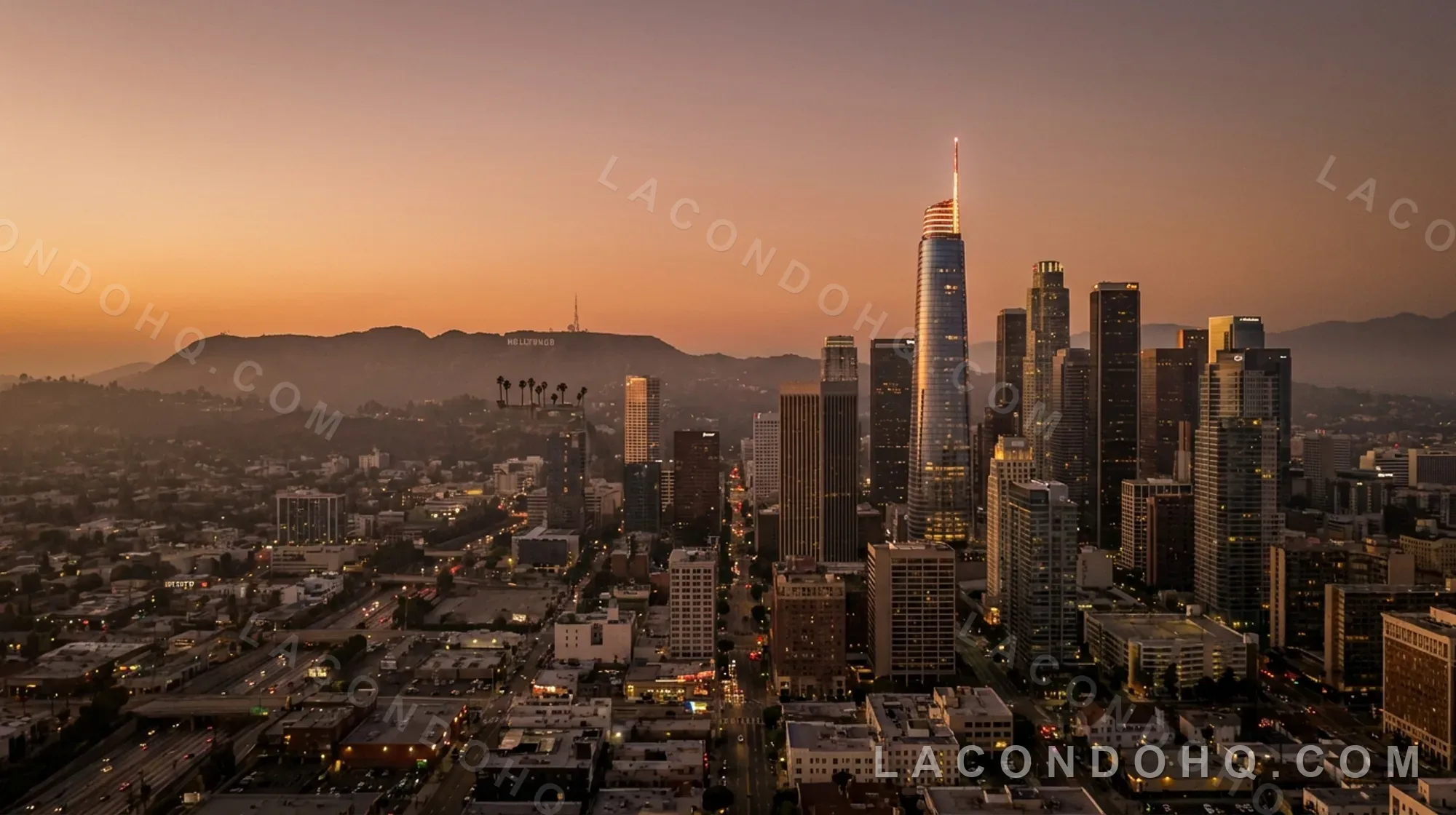
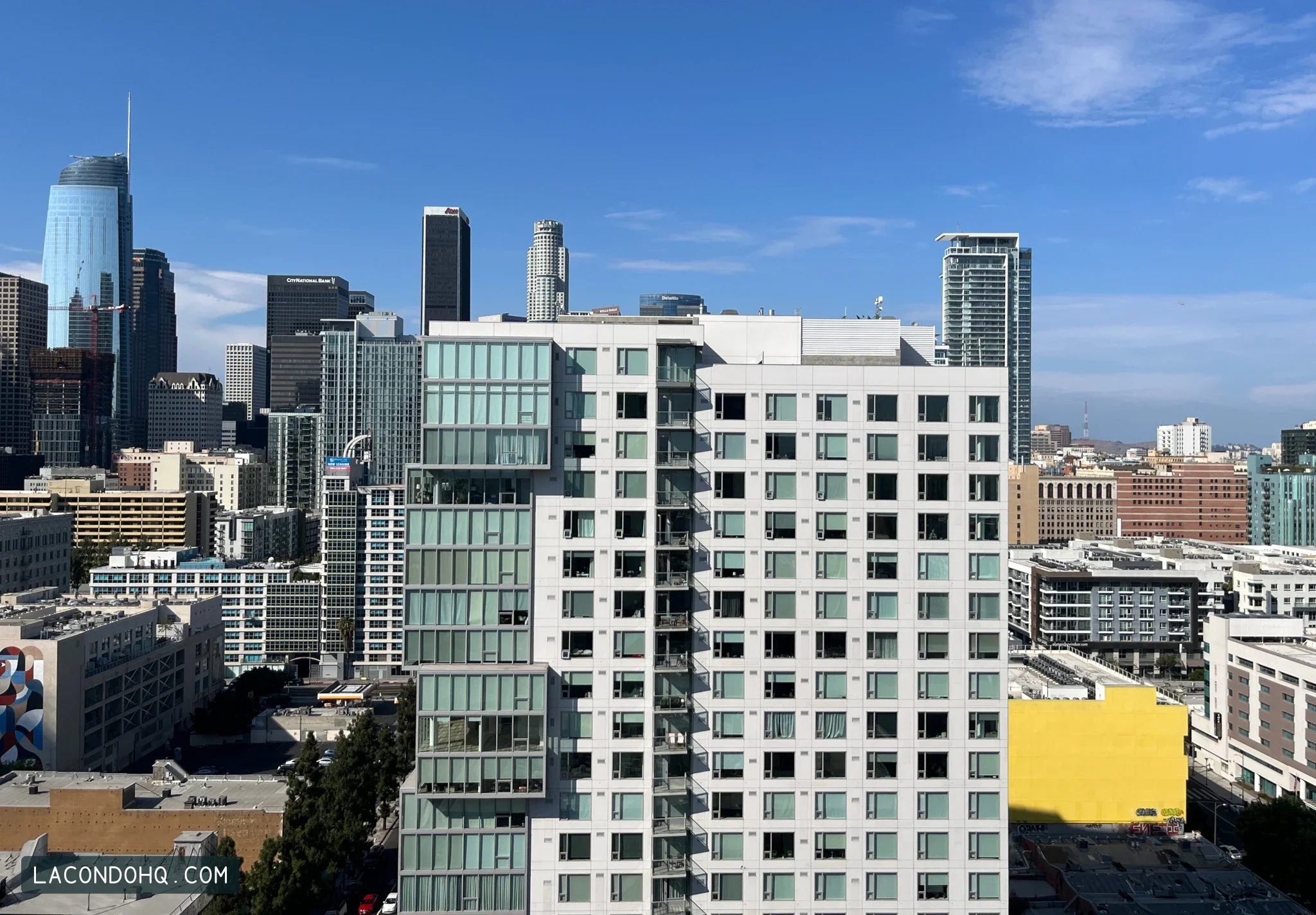
This is where the two genuinely diverge. Koreatown is, by our research, the densest neighborhood in Los Angeles — a true 24-hour district of Korean barbecue, spas, karaoke and soju bars where street life never really stops. Downtown is dense too, but it is really several districts stitched together: the glass towers of South Park near the arena, the brick lofts of the Historic Core, and the lower-slung galleries and breweries of the Arts District. Scale follows from that. Our building directory profiles about 33 condo buildings in Koreatown against about 163 Downtown, and on September 26, 2026, LA Condo HQ showed 132 Koreatown condos listed for sale against 334 Downtown. Koreatown offers concentrated energy and a curated set of towers; Downtown offers far more to choose from and three distinct sub-neighborhoods to pick a personality from.
Metro lines that reshape the commute
Both neighborhoods are anchored by rail, which is the whole reason they enable car-light living. Koreatown is threaded by the Metro D (Purple) Line running under Wilshire, with stations at Wilshire/Western, Wilshire/Normandie and Wilshire/Vermont, plus a B (Red) Line stop at Wilshire/Vermont — a genuinely rare density of transit for LA. Downtown is the hub the whole system points at: the convergence of Metro rail lines and the regional Union Station, putting one-seat rides across the county at your door. For a commuter, Koreatown's strength is frequent service along a single powerful corridor; Downtown's is being the place every line already goes.
Historic conversions or new glass — the housing split
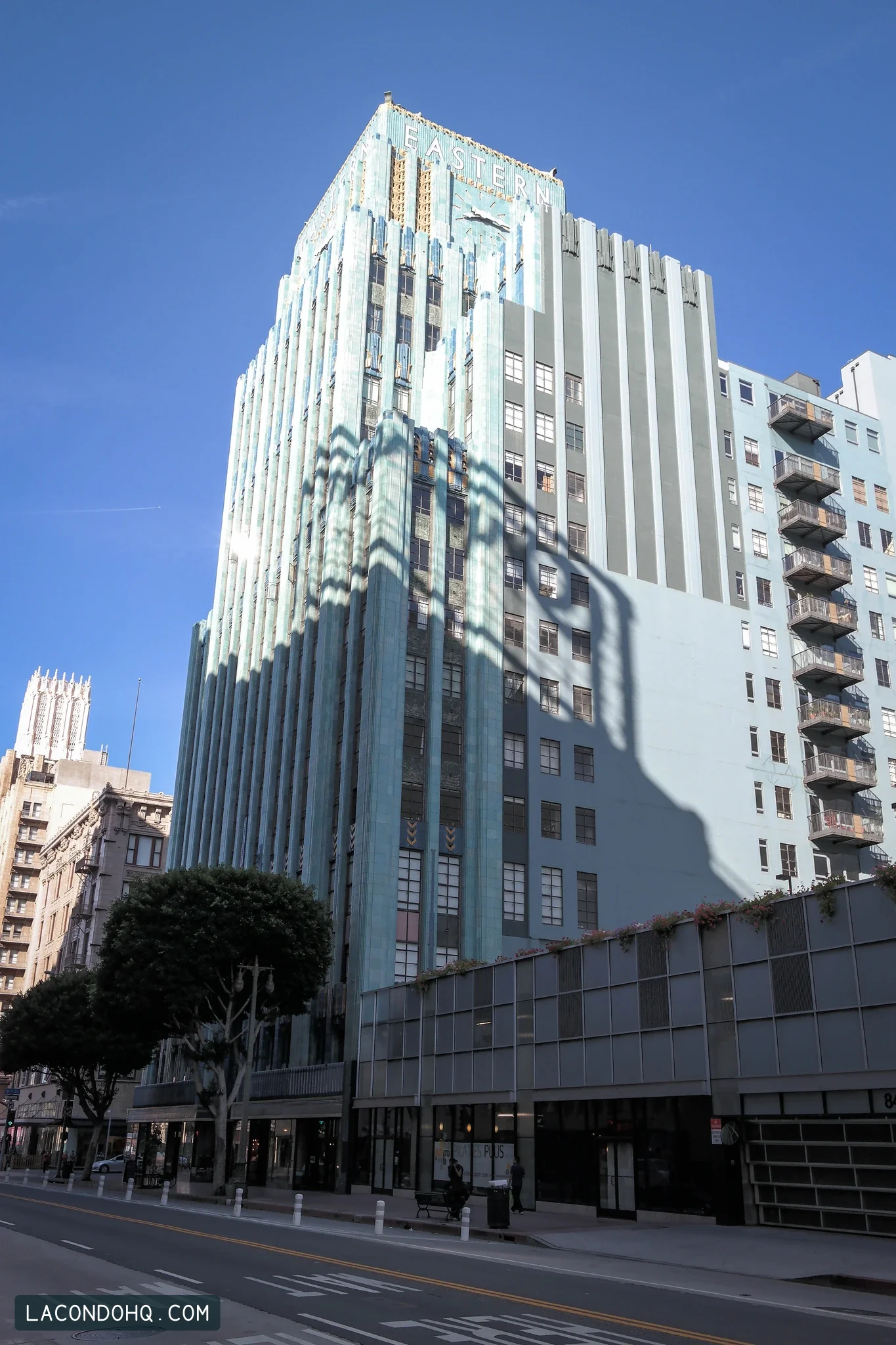
Building type and ownership form are separate questions. Downtown’s profiles include Ten50, Eastern Columbia and Perla, while Koreatown offers a mix of residential eras and operating models. The Pearl on Wilshire advertises apartments and a leasing center. It can illustrate the area’s rental housing, but it does not establish a condominium purchase option for this comparison.
Carrying costs and what to check before an offer
In both neighborhoods, the sticker price is only half the math. Full-amenity high-rises with pools, gyms, concierge and valet carry meaningful HOA dues, and our research notes Downtown's full-service towers commonly run from around $600 to well over $1,200 a month depending on the building. Koreatown's historic conversions and smaller mid-rises can carry lighter dues, but older buildings raise their own questions about reserves and deferred maintenance. In either place, pull the HOA budget, the reserve study and any special-assessment history before you write an offer, and weigh the monthly carry alongside the purchase price. For current dues context and neighborhood-level pricing, /market-stats is the place to verify today's figures rather than relying on any single quoted average.
Which core wins your shortlist
Choose Koreatown if you want the densest, most around-the-clock urban life in Los Angeles, exceptional transit along Wilshire, and a location wedged between Downtown and Hollywood — and you value walk-out energy over maximum square footage. Choose Downtown LA if you want the widest selection of buildings and sub-neighborhoods, the lowest median entry price among LA's cores, and the region's single most connected transit hub. Neither is the Westside, and that is the point: both are bets on central, car-light LA at a genuine discount. When you have narrowed to a specific building in either, that is the moment to read its documents closely — and to check /market-stats for where its neighborhood's numbers actually stand today.
Questions buyers ask about Koreatown and Downtown LA
Which is cheaper, Koreatown or Downtown LA?
Downtown is cheaper to get into, and per square foot they are nearly even. As of September 26, 2026, the median asking price on condo listings was about $589,000 in Downtown LA and about $695,000 in Koreatown, but the median price per square foot was roughly $618 Downtown against roughly $603 in Koreatown. Koreatown's higher median mostly reflects larger units. These are asking prices, not closed sales.
Which has more condo inventory?
Downtown, by a wide margin. On September 26, 2026, LA Condo HQ showed 334 Downtown condos listed for sale against 132 in Koreatown, and our building directory profiles about 163 Downtown condo buildings against about 33 in Koreatown. Downtown also splits into three distinct sub-neighborhoods — the glass towers of South Park, the brick lofts of the Historic Core, and the lower-slung galleries and breweries of the Arts District.
Can you live car-free in either?
Both are anchored by rail, which is the whole reason they enable car-light living. Koreatown is threaded by the Metro D (Purple) Line under Wilshire with stations at Wilshire/Western, Wilshire/Normandie and Wilshire/Vermont, plus a B (Red) Line stop at Wilshire/Vermont. Downtown is the hub the whole system points at, with the convergence of Metro rail lines and regional Union Station.
What kinds of buildings does each offer?
Compare the individual profiles and their ownership documents rather than assuming that a tower’s appearance determines tenure. The Pearl on Wilshire operates apartment leasing; it is not a condominium-purchase example. Downtown’s profiles include Ten50, Eastern Columbia and Perla, each with its own source notes.
What are the HOA dues like?
Full-amenity high-rises with pools, gyms, concierge and valet carry meaningful dues, and our research notes Downtown's full-service towers commonly run from around $600 to well over $1,200 a month depending on the building. Koreatown's historic conversions and smaller mid-rises can carry lighter dues, but older buildings raise their own questions about reserves and deferred maintenance.
Sources and review scope
Sources checked 2026-09-06. The notes identify which facts each publication supports.
- Published property identity — The Pearl
The Pearl on Wilshire’s official gallery describes apartments and a leasing center. It supports the rental community at 687 South Hobart Boulevard.

Written by
LA Condo HQ
Real-estate research publisher
LA Condo HQ is published by Eltherion, LLC to help readers research Los Angeles buildings, neighborhoods and real-estate decisions. We publish source notes, ownership guides and practical tools, and help readers request introductions to licensed partner agents. We are not a licensed brokerage.

_Los_Angeles_July_2022.JPG)
