Current numbers, September 28, 2026
Condos listed on the MLS right now, refreshed every six hours.
| Neighborhood | For sale | Median asking | Median $/sq ft | For rent | Median rent |
|---|---|---|---|---|---|
| Hollywood | 67 | $691K | $598 | 101 | $4,050/mo |
| West Hollywood | 174 | $899K | $858 | 184 | $4,825/mo |
Medians appear only when enough listings publish the figure; a dash means too few to report. Full neighborhood reports
Two Sunset-adjacent markets, one real price gap
Hollywood and West Hollywood sit side by side along the Sunset corridor, share a nightlife-and-entertainment identity, and are often lumped together by out-of-town buyers. On a condo search they behave very differently. As of September 26, 2026, the median asking price on condo listings in Hollywood was about $691,000, roughly $598 per square foot (/market-reports/hollywood), while West Hollywood's was about $899,000, roughly $866 per square foot (/market-reports/west-hollywood). Those are asking prices on listings published on LA Condo HQ, not closed sales, and they move as listings come and go; the citywide picture is at /market-stats. The direction is the story: West Hollywood commands a meaningful premium for a compact, design-driven city, and Hollywood is where the corridor's value sits.
Hollywood: art-deco value on the Boulevard
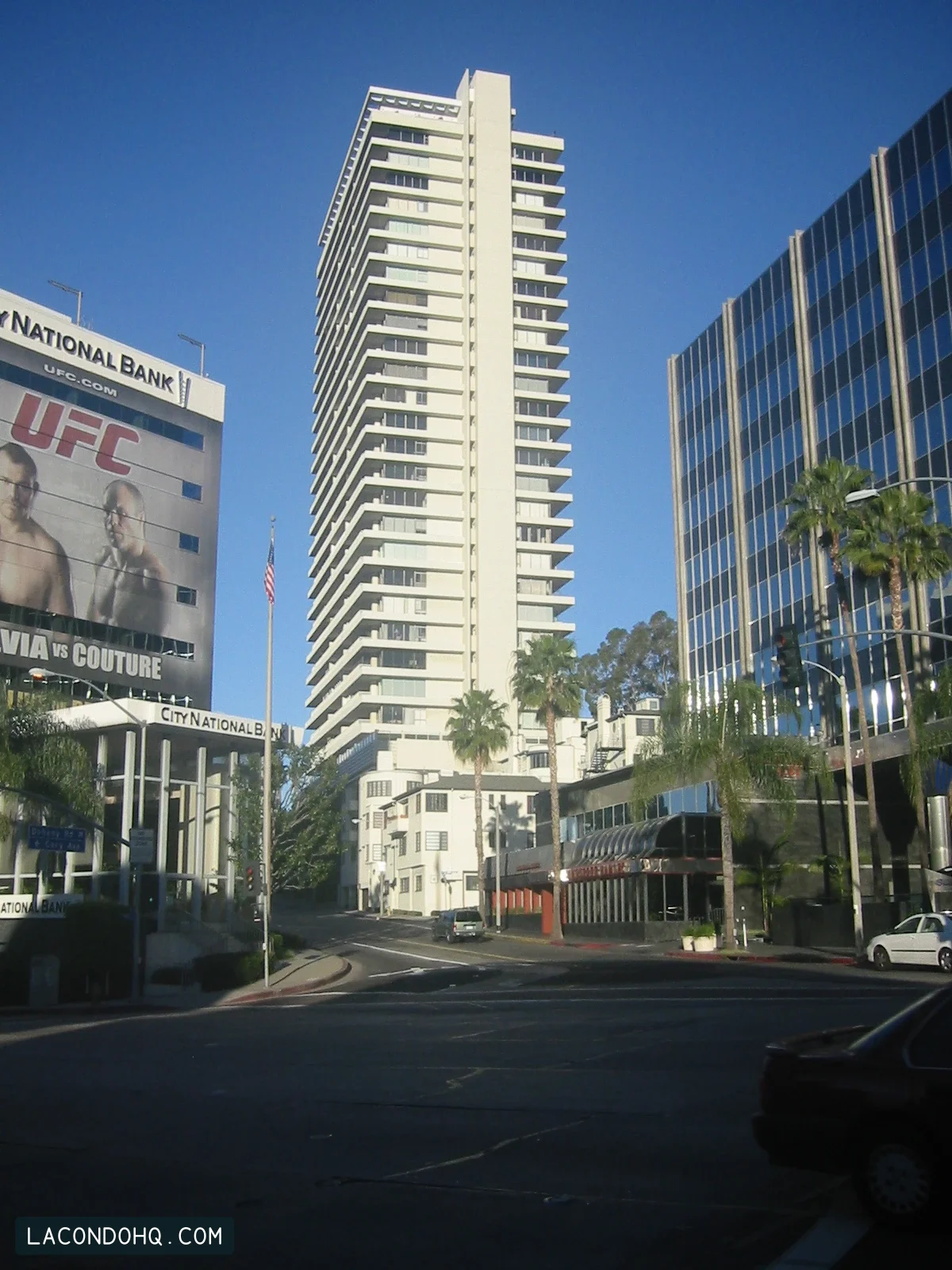
Hollywood is the larger and more affordable of the two, with condos spread across a wide range of buildings, from restored art-deco and mid-century towers along the Boulevard to newer transit-oriented construction near the Metro B Line stations. The lower price per foot means a given budget buys more space. The listing count runs the other way, though: on September 26, 2026, LA Condo HQ showed 67 Hollywood condos listed for sale against 174 in West Hollywood, so do not assume the cheaper market is also the one with more to choose from. The trade-off is that Hollywood is a neighborhood of the City of Los Angeles, so its blocks vary sharply from polished and walkable to gritty and in transition. Buyers who do their homework on the specific building and block are the ones who capture the value.
West Hollywood: its own city, its own rules
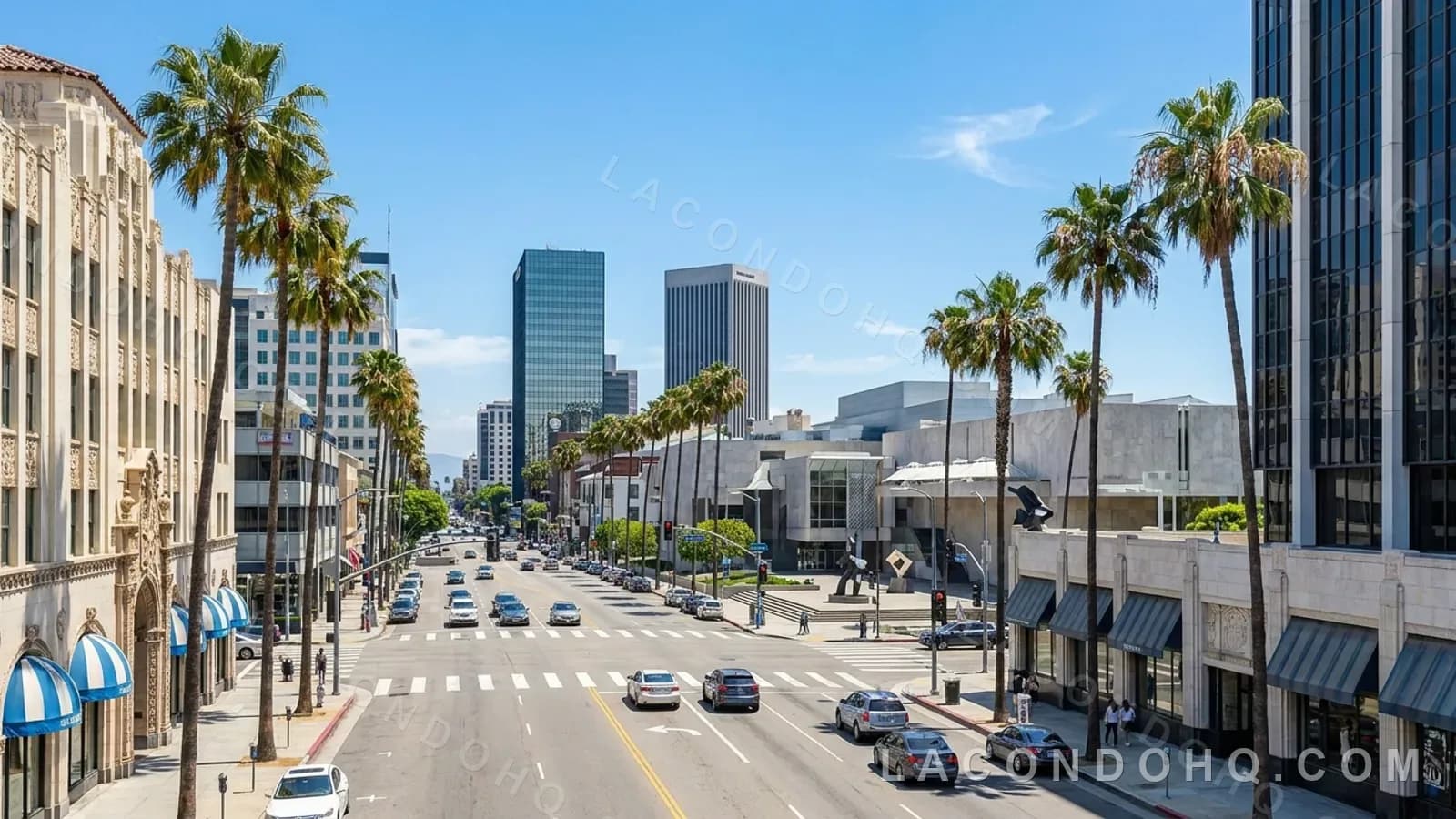
The most important thing to understand about West Hollywood is that it is not part of Los Angeles at all. It is a separately incorporated city of under two square miles, with its own city council, its own planning rules and its own rent-stabilization ordinance. That independence shows up in the built environment: tightly controlled design, the Pacific Design Center and the Sunset Strip, a dense and walkable street grid, and a concentration of boutique buildings rather than sprawling towers. It is smaller, pricier and more curated than Hollywood, and for many buyers the city's identity and walkability are precisely what the premium buys.
The price and price-per-foot gap
The roughly $208,000 gap in median asking price and the nearly $270-per-square-foot difference between the two are not just a location premium; they reflect what each market is made of. West Hollywood's higher price per foot rewards its design pedigree and its independent-city cachet. Hollywood's lower number reflects a more varied building stock and blocks still finding their footing. If you are optimizing for space and entry price, Hollywood almost always wins on paper; if you are buying the address, the walkability and the smaller-city feel, West Hollywood is where that lives. Because these medians describe asking prices on the listings active that day, confirm any specific building's pricing against current listings before you draw conclusions.
Governance: what a buyer inherits
Both markets are condos, so both are governed by California's Davis-Stirling Act, which sets the rules for HOAs, reserves, assessments and the SB 326 balcony inspections that apply to buildings with elevated wood-framed decks. Where they diverge is rental regulation. West Hollywood has one of California's strongest rent-stabilization ordinances, which matters enormously if you intend to lease your unit, since it governs allowable increases and just-cause eviction for covered rentals. Hollywood, as part of Los Angeles, falls under the city's own Rent Stabilization Ordinance for eligible units. If you are buying to live in the unit yourself, this is background; if you are buying to rent it out, read the applicable ordinance and the building's own leasing rules before you commit.
Lifestyle: nightlife, walkability and the drive
Both neighborhoods are built for people who want to walk out the door into restaurants, bars and culture, and both are dense by Los Angeles standards. West Hollywood is the more consistently walkable of the two, with the Strip, Santa Monica Boulevard and the design district within an easy stroll. Hollywood is walkable in pockets and is better served by rail, with Metro B Line stations that put Downtown and North Hollywood within a train ride. Neither is a quiet neighborhood; you are buying into energy, and in the case of the Strip and the Boulevard, into nightlife that runs late. Buyers who prize calm should look hard at the specific building and its position relative to the loudest corridors.
Which one fits you
Choose Hollywood if you want the most space and the lowest entry price on the Sunset corridor and a rail-connected commute, and you are willing to vet the block. Choose West Hollywood if you want an independent, intensely walkable small city, a design-driven housing stock and the Strip at your feet, and the premium is worth it to you. Start with our Hollywood and West Hollywood neighborhood guides for the building-by-building view, and check /market-stats for where prices stand today.
Questions buyers ask about Hollywood and West Hollywood condos
How much more expensive are West Hollywood condos than Hollywood?
As of September 26, 2026, the median asking price on condo listings was about $691,000 in Hollywood, roughly $598 per square foot, against about $899,000 and roughly $866 per square foot in West Hollywood, a gap of about $208,000 on the median and nearly $270 per square foot. These are asking prices on listings published on LA Condo HQ, not closed sales, and each neighborhood's market report carries the current numbers.
Is West Hollywood part of the City of Los Angeles?
No. West Hollywood is a separately incorporated city of under two square miles, with its own city council, its own planning rules and its own rent-stabilization ordinance. Hollywood is a neighborhood of the City of Los Angeles and falls under that city's Rent Stabilization Ordinance for eligible units.
Which of the two gives a condo buyer more space for the money?
Hollywood. On September 26, 2026 asking prices, the median price per square foot was about $598 in Hollywood against roughly $866 in West Hollywood, so a given budget buys more space in restored art-deco and mid-century towers on the Boulevard or newer transit-oriented buildings near the Metro B Line stations. West Hollywood had more condos listed for sale that day, 174 against Hollywood's 67.
What rules govern condo ownership in both neighborhoods?
Both fall under California's Davis-Stirling Act, which sets the rules for HOAs, reserves, assessments and the SB 326 balcony inspections that apply to buildings with elevated wood-framed decks. Rental regulation is where they diverge, so if you intend to lease the unit, read the applicable rent-stabilization ordinance and the building's own leasing rules before you commit.
Should I buy in Hollywood or West Hollywood?
If you are optimising for space and entry price, Hollywood almost always wins on paper; if you are buying the address, the walkability and the smaller-city feel, West Hollywood is where that lives. Because neighborhood medians are asking prices that move with the listings, confirm any specific building against current listings at /condos-for-sale before you draw conclusions.

Written by
LA Condo HQ
Real-estate research publisher
LA Condo HQ is published by Eltherion, LLC to help readers research Los Angeles buildings, neighborhoods and real-estate decisions. We publish source notes, ownership guides and practical tools, and help readers request introductions to licensed partner agents. We are not a licensed brokerage.