
Current numbers, September 28, 2026
Condos listed on the MLS right now, refreshed every six hours.
| Neighborhood | For sale | Median asking | Median $/sq ft | For rent | Median rent |
|---|---|---|---|---|---|
| Downtown LA | 335 | $585K | $619 | 164 | $3,190/mo |
| Sherman Oaks | 79 | $650K | $521 | 35 | $3,850/mo |
| Westwood | 119 | $1.19M | $745 | 95 | $5,495/mo |
Medians appear only when enough listings publish the figure; a dash means too few to report. Full neighborhood reports
You can put solar on a Los Angeles condominium, but the roof is usually common area, so Civil Code section 4746 controls, not the Solar Rights Act alone. The association must process your application and allocate usable roof area equitably among owners sharing that roof, and you carry the insurance, maintenance and removal cost permanently.
Why the Solar Rights Act alone does not hand you a roof
California's Solar Rights Act, Civil Code section 714, makes void and unenforceable any covenant or restriction that unreasonably restricts a solar energy system. Owners read that and assume the argument is finished. In a condominium it has barely started, because section 714 protects installation on property you own or control exclusively, and in most Los Angeles condominium buildings the roof is neither. It is common area the association owns and maintains for everyone, so the real question is not whether the CC&Rs may forbid solar but how one shared surface gets divided among the homes underneath it.
Davis-Stirling makes that harder before it makes it easier. Civil Code section 4600 generally requires the approval of 67 percent of the members before an association grants any one member exclusive use of common area. Applied literally to a roof, that would end condominium solar: no board runs a supermajority ballot so one owner can claim the sunniest corner. The Legislature cut a path through with Civil Code section 4746, effective January 1, 2018, which sets out how a common interest development handles a solar application on a common area roof. That is the section to read first. The scheme it sits inside is at /blog/davis-stirling-act-la-condo-buyers.
What section 4746 makes the association do
The section reframes the board's job from gatekeeper to administrator. An association whose roof is common area must process an owner's application for a solar energy system on that roof, and it may impose reasonable provisions rather than refusing on principle. Those are real constraints, not a formality: placement, penetration method, roofing warranty protection, contractor licensing, access, screening and structural review all fit inside the phrase.
The distinctive requirement is the survey. Section 4746 directs the association to require the applicant to provide a solar site survey showing the proposed placement and including a determination of the equitable allocation of usable solar roof area among all owners who share that roof, garage or carport. That determination is the heart of the statute: it stops the first applicant taking the whole south-facing plane and leaving forty neighbours with shade and mechanical equipment. The survey is separate from architectural review, so treat it as its own deliverable and budget for a licensed contractor to produce it. The architectural process the rest of the job runs through is at /blog/remodeling-an-la-condo-hoa-architectural-review.
The obligations that follow you, and the next owner
Section 4746 pays for that access with a set of duties that attach to the applicant and stay attached. You must give notice of the installation to each owner in the building. You must maintain a solar liability insurance policy and deliver the association a certificate of insurance naming it as an additional insured. And you, together with each successive owner of the unit, are responsible for the cost of damage from the system, and for its maintenance, repair, replacement and removal.
Read that last clause the way a future buyer will. The panels are not an improvement that quietly adds value and then becomes someone else's problem. They are a maintenance and insurance obligation that transfers with the deed and belongs in the disclosure package when you sell. California used the same pattern for electric vehicle charging under Civil Code section 4745, worked through at /blog/ev-charging-la-condo-hoa.
Roof math: a tower and a garden building are different problems
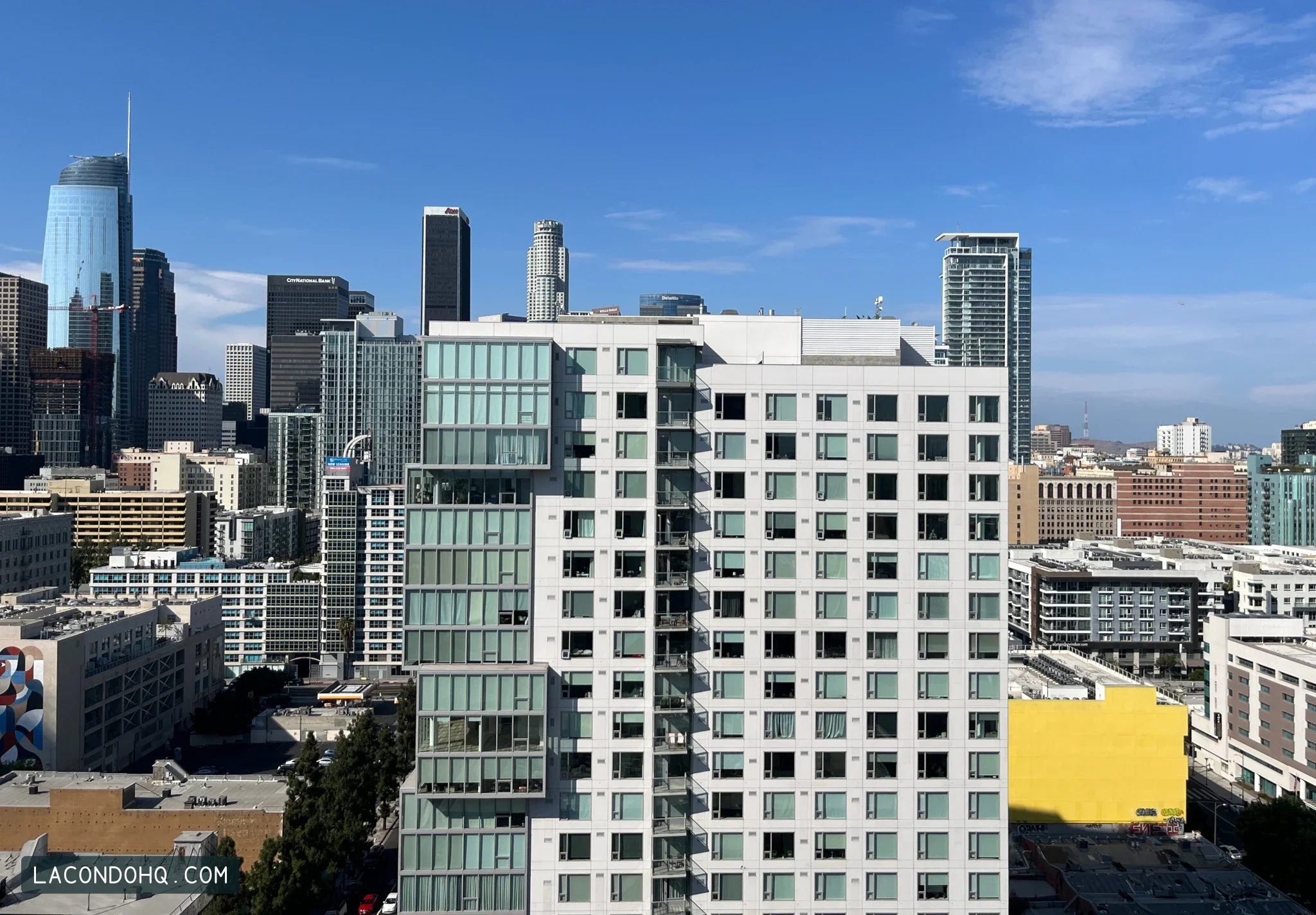
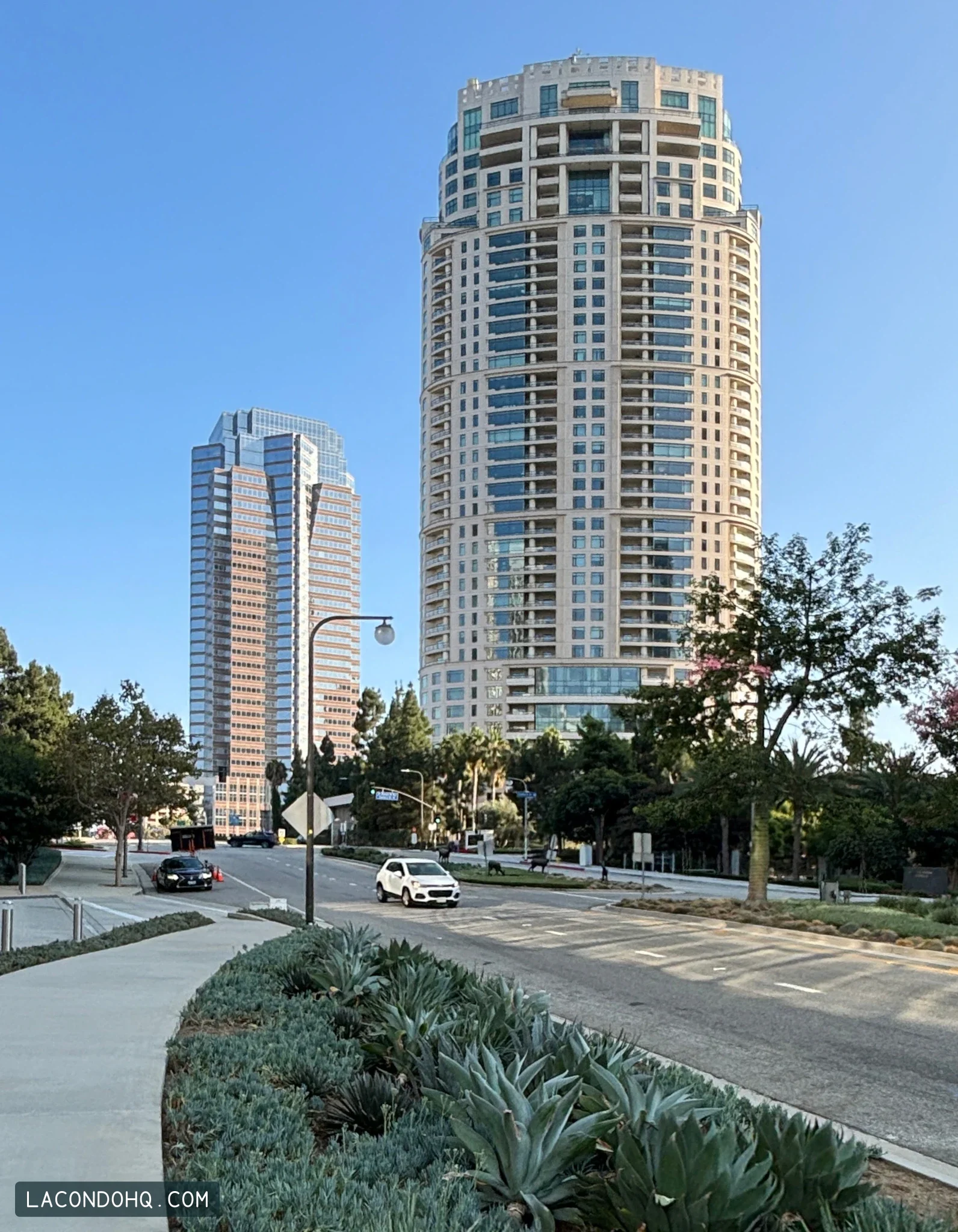
Equitable allocation sounds procedural until you divide an actual roof. Our directory profiles 286 Los Angeles condominium buildings across 14 neighbourhoods, and the physical answer changes completely across that range. A two-storey garden building in the Valley spreads its roof over a handful of homes, so a serious array is arithmetically possible; browse that stock at /neighborhoods/sherman-oaks. A Wilshire Corridor or Downtown high-rise divides one roof among a hundred or more homes, after elevator overruns, cooling equipment, antenna leases, access paths and setbacks. In a tower the honest allocation per unit is often too small to carry a system, and the useful conversation becomes what the association could do for the whole building. The Downtown stock is at /neighborhoods/downtown-la and the full directory at /buildings.
Two physical facts decide more applications than the statute does. The first is the roof's remaining life: panels on a membrane due for replacement in six years mean a removal and reinstallation bill, and an association may reasonably require you to bear it. Check the funding plan first, using the method at /blog/la-condo-reserve-study-percent-funded. The second is historic designation, which adds review layers sitting outside Davis-Stirling entirely, and a Mills Act contract adds its own alteration expectations, at /blog/mills-act-downtown-la-loft-property-tax.
Which utility you are on changes the payback
Rooftop economics here are not one market. Most of the City of Los Angeles is served by the Los Angeles Department of Water and Power, a municipal utility that runs its own net metering program and is not regulated by the California Public Utilities Commission, so the CPUC's net billing rules do not govern it. Several cities we cover — Santa Monica, Beverly Hills and West Hollywood among them — sit in investor-owned utility territory where those rules do apply. Confirm which utility serves your address before modelling a payback period; the export credit decides whether the project pencils. Neither regime changes the association's duties under section 4746.
What to read before you sign a solar contract
Ask the association for the declaration and current architectural rules, any existing solar policy, the reserve study with the roof line item and its replacement year, the roofing warranty and whether penetrations void it, and twelve months of minutes for prior applications. Ask whether another owner already holds an allocation of usable roof area. Then ask your installer, in writing, who produces the allocation survey, who carries the liability policy, what removal costs if the roof is replaced, and what happens if the board imposes provisions you did not price. Asking levels across the market are at /market-stats.
Questions LA condo owners ask about rooftop solar
Can my HOA say no to solar panels on a condo roof?
Not on principle, if the roof is common area. Civil Code section 4746 requires the association to process the application and lets it impose reasonable provisions on the installation instead of refusing it. It can limit placement and method, require a licensed contractor and protect the roofing warranty, and it can deny an application that fails those conditions.
What is the equitable allocation requirement in Civil Code 4746?
The association must require the applicant to submit a solar site survey that shows the proposed placement and determines how the usable solar roof area is equitably allocated among all owners sharing that roof, garage or carport. It exists so the first applicant cannot take the entire usable surface, and it is separate from architectural review.
Who pays to maintain or remove condo solar panels?
You do, and so does whoever buys your unit next. Section 4746 makes the owner and each successive owner responsible for the cost of damage from the system and for its maintenance, repair, replacement and removal. The owner must also carry solar liability insurance and give the association a certificate naming it as an additional insured.
Does the 67 percent member vote in section 4600 apply to solar?
Section 4600 is the general rule requiring 67 percent member approval before an association grants a member exclusive use of common area, and applying it to a roof would block condominium solar entirely. Section 4746 provides the route for common area roofs instead. Confirm with California counsel how the two interact for your building.
What this article is and is not
This is a plain-language map of a statute, current as of September 4, 2026 — not legal advice, and no substitute for your own building's governing documents. Statutes are amended and boards adopt policies beyond them, so read the declaration and the current rules, and retain California counsel before committing to an installation. Utility programs change separately; verify terms with the utility serving the address.
We are a research and listings platform, not a brokerage. We do not list on the MLS, negotiate offers or close transactions. When you are ready to have a specific building's documents reviewed and a unit seen in person, we introduce you to a licensed partner agent.

Written by
LA Condo HQ
Real-estate research publisher
LA Condo HQ is published by Eltherion, LLC to help readers research Los Angeles buildings, neighborhoods and real-estate decisions. We publish source notes, ownership guides and practical tools, and help readers request introductions to licensed partner agents. We are not a licensed brokerage.



_Los_Angeles_July_2022.JPG)
,_Avenue_of_the_Stars_(Century_City)_Sept._2024.jpg)