

Current numbers, September 28, 2026
Condos listed on the MLS right now, refreshed every six hours.
| Neighborhood | For sale | Median asking | Median $/sq ft | For rent | Median rent |
|---|---|---|---|---|---|
| Downtown LA | 335 | $585K | $619 | 164 | $3,190/mo |
| Century City | 44 | $2.25M | $1,179 | 25 | $11,500/mo |
| Hollywood | 67 | $691K | $598 | 101 | $4,050/mo |
Medians appear only when enough listings publish the figure; a dash means too few to report. Full neighborhood reports
California's Right to Repair Act, SB 800, codified at Civil Code section 895 and following, governs construction defects in condominiums sold new after January 1, 2003. It sets deadlines component by component: one year for noise transmission, four years for plumbing and electrical, five years for paint, ten years for structural failures. It also requires you to notify the builder in writing before you sue.
Which LA condos the Act actually reaches
The Act applies to new residential units, including condominiums and the common areas serving them, sold under a purchase agreement signed after January 1, 2003. That date splits the Los Angeles condo stock almost in half. Original construction of a 1920s Koreatown building, a Historic Core loft or a 1960s Wilshire Corridor tower long predates the Act, so claims about how those buildings were first built run under older common-law rules and their own limitation periods. A tower delivered in the last two decades was sold under SB 800, and that is where a defect claim starts. Our Downtown records hold newer buildings of exactly that vintage — /buildings/ten50 and /buildings/perla among them — beside century-old conversions two streets away; see /neighborhoods/downtown-la.
Adaptive reuse complicates that line without erasing it. Units sold as new condominiums out of an old shell are sold new, so whether the Act reaches a given component turns on what was actually newly built. Ask a California construction-defect attorney early; the deadlines below are short.
The deadlines run part by part, not building by building
Most buyers assume there is one deadline. There are dozens. Civil Code section 896 sets functionality standards for individual building components and attaches a limitation period to many of them, generally measured from close of escrow. The short ones expire before most owners notice anything is wrong.
Noise transmission and irrigation and drainage issues carry roughly a one-year window. Untreated wood posts, landscaping systems and dryer ducts sit at about two years. Plumbing and sewer systems, electrical systems, roofing materials, ceramic tile and tile backing, and untreated steel fences run about four years. Paint and stains get five. Water intrusion, soils, structural and fire-protection standards are governed by the Act's outer ten-year limit instead. Separately, section 900 requires the builder to give a written limited warranty of at least one year on the fit and finish of items such as cabinets, mirrors, flooring, walls, countertops, paint finishes and trim. Whether a given symptom falls under a one-year standard or a ten-year one is a legal question with real money attached.
The ten-year outer limit and where it starts
Section 941 sets the backstop: no action may be brought more than ten years after substantial completion of the improvement, which is generally tied to recordation of a valid notice of completion or, absent one, the date the last labor or materials were furnished. That is a building date, not your purchase date — the trap for a second or third owner. Buy in year eight of a building's life and you have inherited at most two years of the outer window on structural and water-intrusion claims, however long you go on to own. Ask in writing when the building was substantially completed and whether a notice of completion was recorded.
Section 907 runs the other way: owners are expected to follow the builder's reasonable maintenance recommendations and the association's schedule, and failure to do so can reduce what you recover. Keeping the maintenance record is part of preserving the claim.
The notice you must serve before filing
SB 800 is not a straight path to court. Sections 910 through 938 set a prelitigation procedure the owner works through first, opening with a written notice of claim that describes the alleged violation in reasonable detail. The builder then has 14 days to acknowledge receipt, defined periods to inspect and test, and a deadline to make a written offer to repair, which the owner accepts or answers with a request for mediation.
The teeth cut both ways. If the builder misses a deadline or fails to follow the process, the owner is generally released from the rest of it and can proceed to court. If the owner files without serving the notice, expect to be sent back into the process. Serve the notice.
When the defect is in the common area, the association drives
Almost every serious condo defect — the roof, the podium, the balconies, the risers, the envelope — is common area, so the association owns the claim, not you. Davis-Stirling section 6000 puts pre-filing duties on an association before it sues a builder: it must serve members a notice of commencement of legal proceedings at least 30 days before filing, with specified disclosures on anticipated cost, funding source and the effect on members.
Two consequences follow for a buyer. Read the minutes for that notice and for any pre-litigation settlement with the builder — a settlement paid years ago, and spent, does not mean the repair was done. And know what an active defect suit does to financing: projects in material construction-defect litigation are commonly unwarrantable for conventional loans, the mechanism at /blog/non-warrantable-condos-los-angeles.
What to ask before you buy a newer building
The disclosures already exist; the work is asking for them and reading them. California's resale package requires the seller to deliver, among other documents, the association's preliminary list of construction defects where it has one, any notice of settlement of common-area defect claims, and a statement on pending claims and litigation — the full set is at /blog/hoa-resale-package-la-condo. Add twelve months of minutes, the reserve study and the notice of completion date.
Then read them against each other. A settled defect claim with no matching repair line in the reserve study is a future special assessment wearing a resolved label; how well reserves stand behind it is the exercise at /blog/la-condo-reserve-study-percent-funded. Newer construction is not a pass on diligence but a different diligence, against a clock that starts at substantial completion and never restarts when the deed changes hands. Browse /buildings and asking levels at /market-stats, then bring an attorney to the documents.
Questions LA condo owners ask about SB 800
Does SB 800 apply to my LA condo?
It applies to residential units, including condominiums and their common areas, sold new under a purchase agreement signed after January 1, 2003. Original construction of an older building generally falls outside it, and claims about it run under other rules. Adaptive-reuse projects sold as new condominiums are a mixed case, depending on what was newly built.
How long do I have to bring a construction defect claim in California?
It depends on the component. The Act attaches a limitation period to many of them, generally from close of escrow: roughly one year for noise and drainage, two for landscaping and dryer ducts, four for plumbing, electrical, roofing and tile, five for paint. Structural, water-intrusion, soils and fire-protection claims fall under the ten-year outer limit in section 941.
Do I have to notify the builder before suing?
Yes. Sections 910 through 938 require a written notice of claim first, after which the builder has 14 days to acknowledge, then defined periods to inspect and test and a deadline to offer a repair in writing. If the builder misses a deadline you are generally released from the process.
Who sues over a defect in the roof or the balconies?
The association, because those are common areas it owns and maintains. Davis-Stirling section 6000 requires the board to serve members a notice of commencement of legal proceedings at least 30 days before filing, with disclosures on cost, funding and the effect on owners. Look for it in the minutes when you buy.
What this article is and is not
This is a plain-language map of a statute, current as of September 3, 2026 — not legal advice, and no substitute for reading your own building's documents. Statutes are amended, and how a court applies a standard to a specific symptom turns on facts. If you think you have a defect, retain a California construction-defect attorney before a deadline passes. Our building pages are research assembled by our team, not appraisals or live comparables.
We are a research and listings platform, not a brokerage. We do not list on the MLS, negotiate offers or close transactions. When you are ready to have a specific building's documents reviewed and a unit seen in person, we introduce you to a licensed partner agent.

Written by
LA Condo HQ
Real-estate research publisher
LA Condo HQ is published by Eltherion, LLC to help readers research Los Angeles buildings, neighborhoods and real-estate decisions. We publish source notes, ownership guides and practical tools, and help readers request introductions to licensed partner agents. We are not a licensed brokerage.

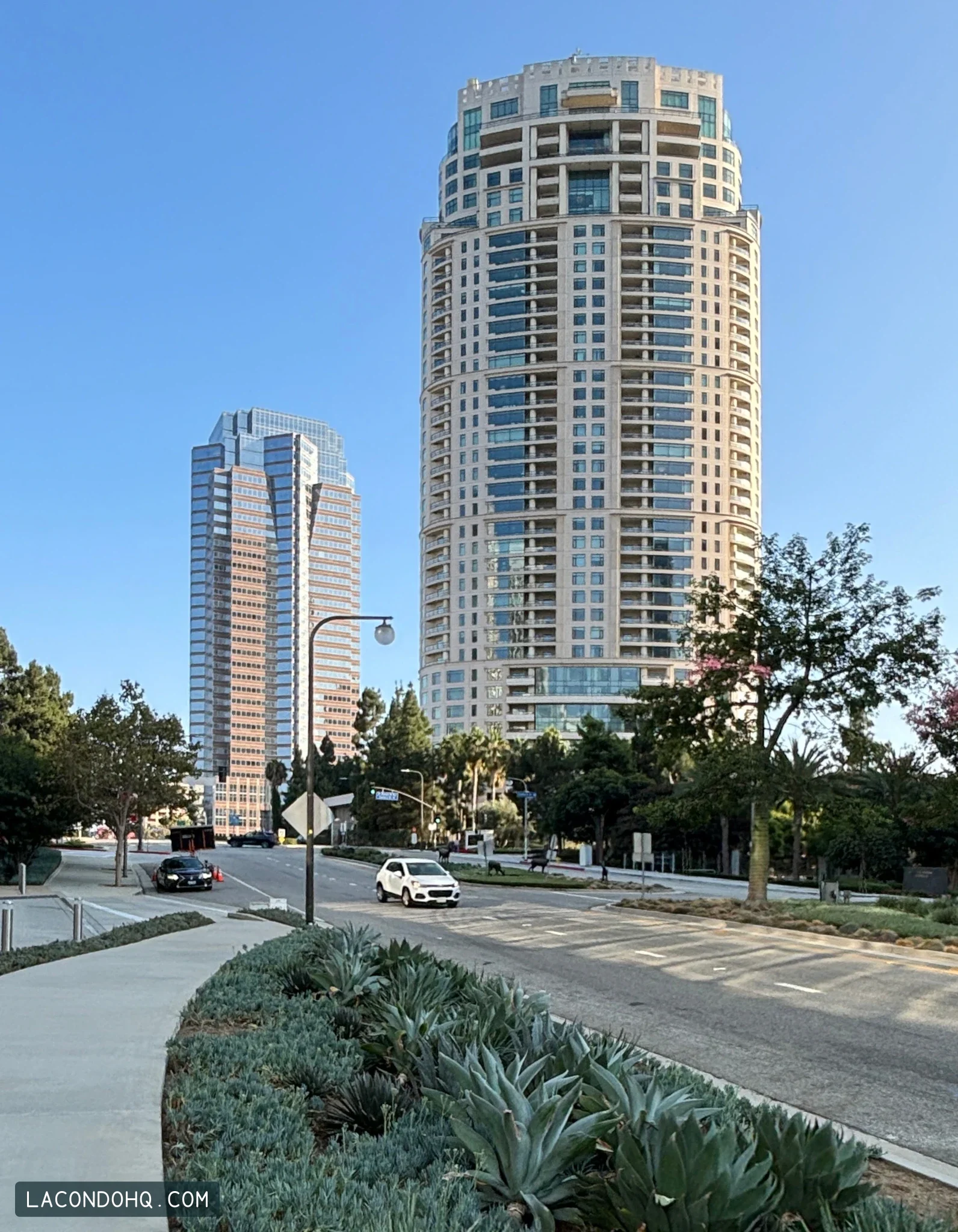




_Los_Angeles_July_2022.JPG)
,_Avenue_of_the_Stars_(Century_City)_Sept._2024.jpg)