Current numbers, September 28, 2026
Condos listed on the MLS right now, refreshed every six hours.
| Neighborhood | For sale | Median asking | Median $/sq ft | For rent | Median rent |
|---|---|---|---|---|---|
| Downtown LA | 335 | $585K | $619 | 164 | $3,190/mo |
| West Hollywood | 174 | $899K | $858 | 184 | $4,825/mo |
| Mid-Wilshire | 22 | $765K | $620 | 98 | $4,163/mo |
Medians appear only when enough listings publish the figure; a dash means too few to report. Full neighborhood reports
Before you swing a hammer in a Los Angeles condo, two separate approvals are usually in play: your association's architectural review, governed by Civil Code section 4765, and a City of Los Angeles building permit. Section 4765 requires the board's procedure to be fair, reasonable and in good faith, and every decision to be in writing.
What section 4765 actually obliges the board to do
Section 4765 applies wherever the governing documents require association approval before an owner makes a physical change to a separate interest or to the common area. Where it applies, it puts four obligations on the association, and they are more specific than most owners expect.
The procedure has to be fair, reasonable and expeditious, and it has to live in the governing documents rather than in the folklore of whoever chairs the committee. It must set deadlines for the association's response, so the maximum time a board may take is a number you can look up rather than a matter of patience.
The decision has to be made in good faith, and it may not be unreasonable, arbitrary or capricious. It has to be consistent with governing law, which is the hook that pulls fair-housing obligations into an architectural decision.
And the decision has to be in writing. If the application is disapproved, that writing has to include an explanation of why, plus a description of how the owner can seek reconsideration by the board. A denial delivered verbally, or delivered in writing with no reason attached, does not meet the statute. The wider framework these rules sit inside is at /blog/davis-stirling-act-la-condo-buyers.
Section 4765 also requires the association to send members an annual notice describing the kinds of changes that need approval, enclosing the review procedure itself.
Your unit stops at the paint, not the studs
The reason a condo remodel needs anyone's permission at all is that you own less of the building than a house owner does. In a California condominium the separate interest is a defined space, plus an undivided share of the common area, and the wall cavity is generally not part of it.
That boundary decides which parts of a remodel are yours to decide. Finishes, cabinetry and fixtures inside the airspace are usually the owner's. Anything reaching into a wall, a slab or a shaft — moving a drain, adding a circuit, cutting a new vent through an exterior wall — reaches into space the association controls, which is why those items draw the closest review. Where the maintenance line falls afterwards is set by Civil Code section 4775, covered at /blog/la-condo-water-leak-who-pays-hoa.
A remodel that takes over common area for your exclusive use is a different animal again. Annexing a hallway alcove or enclosing a light well is a grant of exclusive use common area, and Civil Code section 4600 generally requires the approval of 67 percent of the members before an association can make one, subject to a list of statutory exceptions. That threshold is why a plan that looks minor on paper can stall for a year.
Accessibility work sits under its own rule: Civil Code section 4760 lets an owner modify their separate interest at their own expense to facilitate access for a person with a disability, subject to conditions including submitted plans and a licensed contractor.
Hard flooring is the request that gets denied
The application that generates the most friction is usually the same one: replacing carpet with wood, tile or luxury vinyl in a building with occupied units below.
The reason is impact noise, the one remodel item whose consequences land in someone else's home. Associations commonly respond with flooring rules rather than a flat ban — a required percentage of soft covering in living areas, a minimum acoustic underlayment specification, or a required impact-insulation rating for the assembly. The California Building Code sets minimum sound-transmission ratings for separations between dwelling units in new multifamily construction, and boards frequently borrow that benchmark when writing retrofit rules.
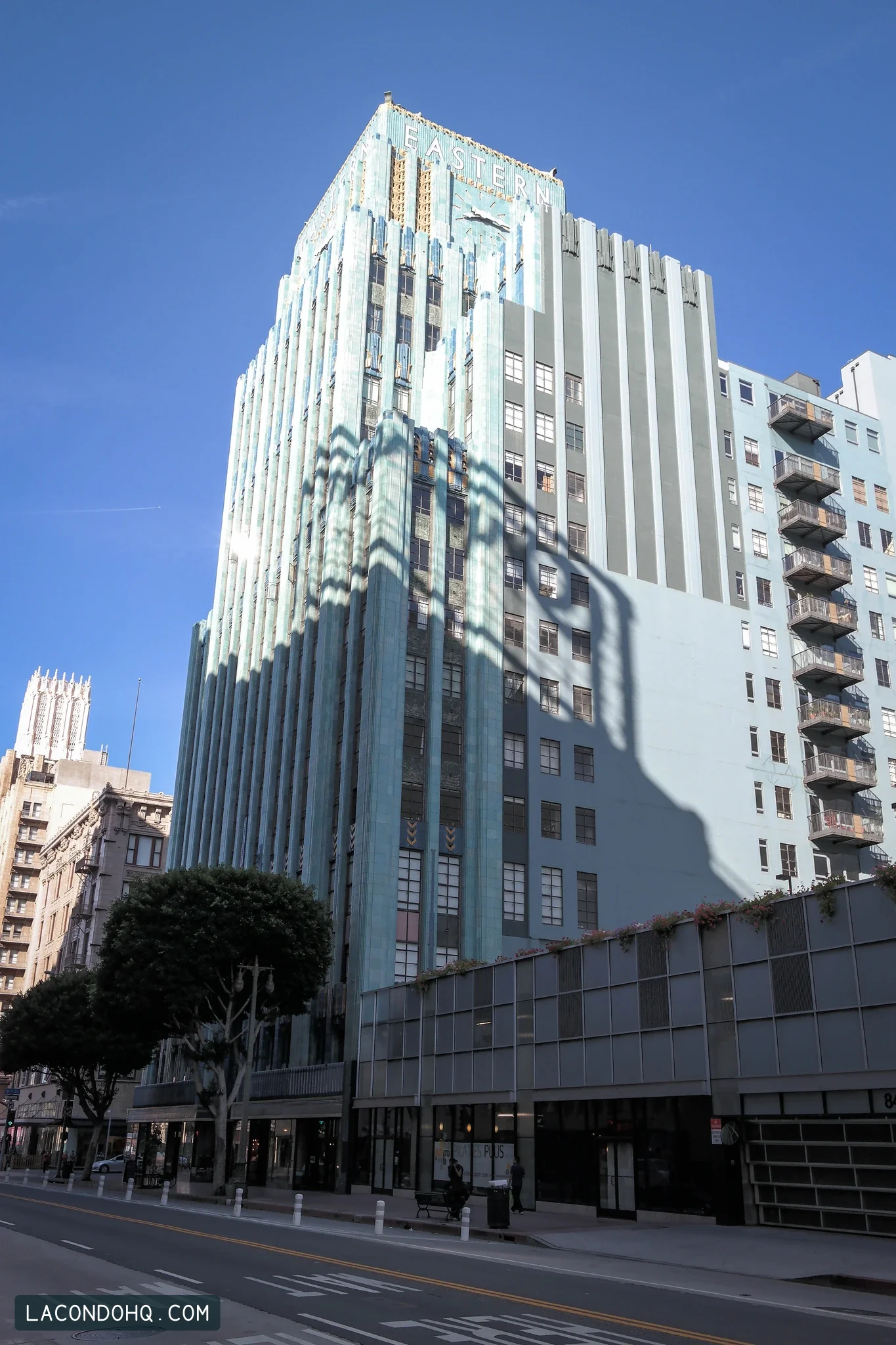
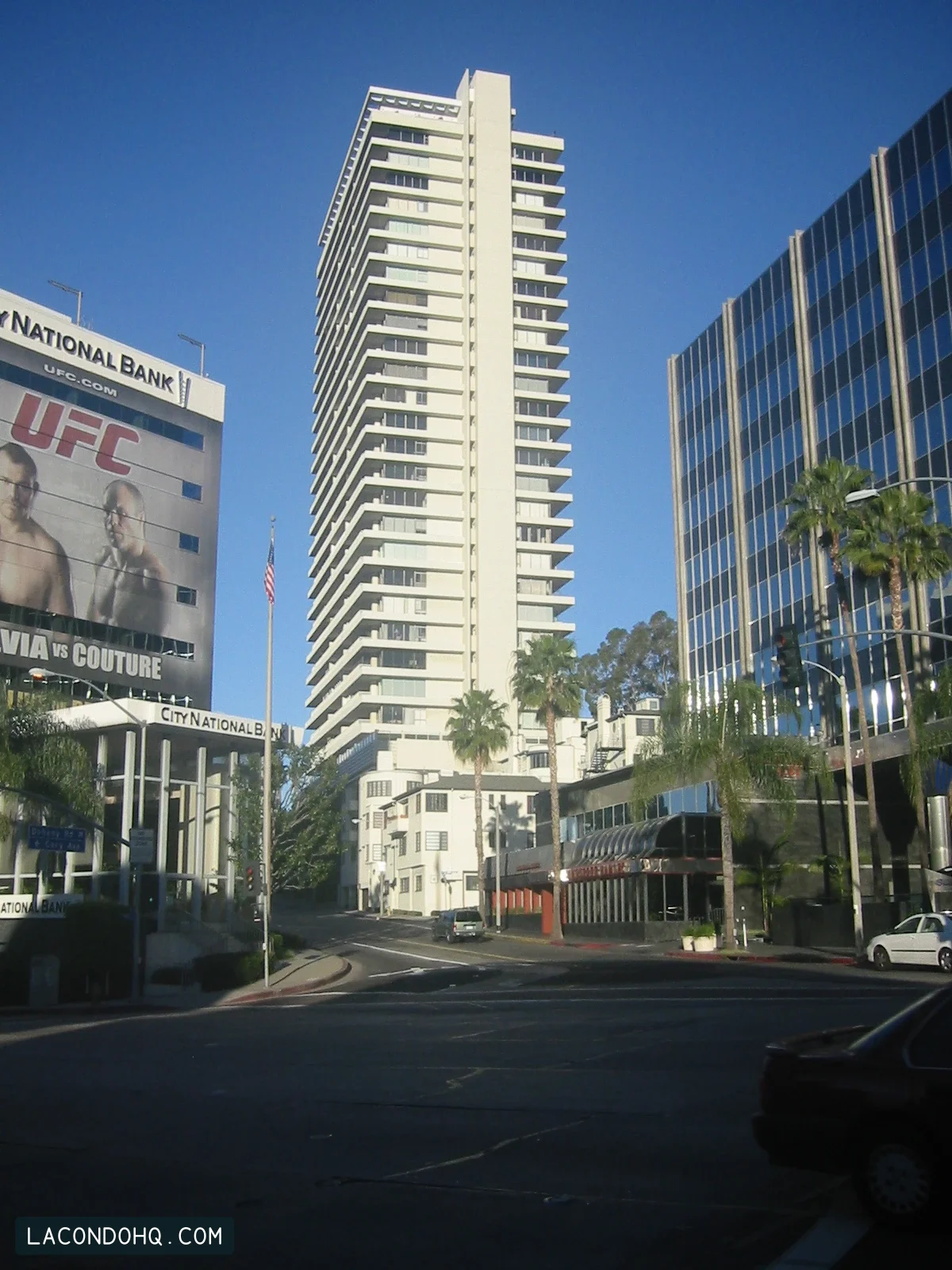
So the flooring question is answered by your building's rules and by the age of its structure, not by a statute. A post-war concrete tower and a 1920s timber-framed conversion behave very differently underfoot. Our directory spans both eras — /buildings/eastern-columbia-building and /buildings/sierra-towers sit at opposite ends of it — and the flooring rule is a building-level fact, not a market-level one.
HOA approval and a city permit are not the same thing
Getting the board's letter is not permission to build. Structural work, and work touching plumbing, electrical or mechanical systems, generally requires a permit from the Los Angeles Department of Building and Safety, and California's energy standards apply to alterations as well as new construction. Cosmetic work — paint, cabinets, fixtures swapped in place — generally does not.
The sequence usually runs association first, city second, because the permit application often needs the plans the board already approved. California also requires a licensed contractor for work where labor and materials together come to 500 dollars or more, and associations routinely ask for the license number, a certificate of insurance naming the association, and a schedule of work hours.
The cost of skipping either track is deferred rather than avoided. Unpermitted work surfaces later in the seller's disclosures and in the association's records, both of which a buyer receives before closing — what is in that package is at /blog/hoa-resale-package-la-condo.
Older buildings add a layer
Two more filters apply disproportionately in Los Angeles, where a large share of the condo stock is converted or predates 1980.
The first is hazardous materials. Buildings from that era can contain asbestos in floor tile, mastic, pipe insulation and ceiling texture, and South Coast AQMD Rule 1403 requires a survey before renovation or demolition activity that would disturb those materials. Federal lead-safe renovation rules apply to housing built before 1978. Both are reasons a board asks for a scope of work rather than a sentence.
The second is historic status. A building under a Mills Act contract, or inside a preservation zone, can carry a design review on top of the association's — most visibly in the Historic Core lofts profiled at /neighborhoods/downtown-la. How that tax program works is at /blog/mills-act-downtown-la-loft-property-tax.
Questions LA condo owners ask about remodeling approval
Does an HOA have to give its decision in writing?
Yes. Civil Code section 4765 requires the association's decision on a proposed physical change to be in writing, and a disapproval must include both an explanation of why it was denied and a description of the procedure for reconsideration by the board.
How long does a board have to respond to an architectural application?
The statute does not set one universal deadline; it requires the association's own procedure to be expeditious and to contain deadlines for its response. The number that binds your board is in your governing documents, which section 4765 requires the association to send members annually.
Can a board deny hardwood floors in an LA condo?
A board can enforce flooring rules in the governing documents, which commonly set a soft-covering percentage, an underlayment specification or an acoustic rating rather than a flat prohibition. The decision still has to be made in good faith and cannot be arbitrary or capricious under section 4765.
Do I still need a city permit if the association approves the work?
Usually yes for anything structural, electrical, plumbing or mechanical. Association approval and a Los Angeles Department of Building and Safety permit are separate tracks with separate reviewers, and one does not substitute for the other.
What if the remodel takes over part of the common area?
A grant of exclusive use common area to one owner generally requires approval by 67 percent of the members under Civil Code section 4600, subject to statutory exceptions. That is a materially higher bar than an architectural committee sign-off, and it is worth confirming before you design around it.
How to use this article
The section numbers above are settled California law as of September 2, 2026; the general-practice observations are labeled as such. This is general information, not legal advice — architectural rules, flooring specifications and approval deadlines are set building by building in documents we cannot see from here.
Our directory holds Los Angeles buildings, neighborhoods and pricing research — the records at /buildings and the current figures at /market-stats. None of it includes your association's declaration, rules or architectural guidelines, and those documents decide your question.
We are a research and listings platform, not a brokerage. We do not list on the MLS, negotiate offers or close transactions. When you are ready to see specific buildings, we introduce you to a licensed partner agent.

Written by
LA Condo HQ
Real-estate research publisher
LA Condo HQ is published by Eltherion, LLC to help readers research Los Angeles buildings, neighborhoods and real-estate decisions. We publish source notes, ownership guides and practical tools, and help readers request introductions to licensed partner agents. We are not a licensed brokerage.