Current numbers, October 26, 2026
Condos listed on the MLS right now, refreshed every six hours.
| Neighborhood | For sale | Median asking | Median $/sq ft | For rent | Median rent |
|---|---|---|---|---|---|
| West Hollywood | 178 | $899K | $811 | 212 | $5,000/mo |
| Mid-Wilshire | 21 | $719K | $630 | 108 | $4,300/mo |
| Downtown LA | 329 | $565K | $601 | 169 | $3,100/mo |
Medians appear only when enough listings publish the figure; a dash means too few to report. Full neighborhood reports
In a California condo, Civil Code section 4775 sets the default: the association repairs, replaces and maintains the common area, the owner maintains the exclusive use common area attached to their unit, and since January 1, 2017 the association repairs and replaces that exclusive use area. Your CC&Rs can change all of it.
The default rule, and the line it draws
Davis-Stirling, the statute governing California common interest developments, answers the maintenance question in a single section. Section 4775 says that unless the declaration provides otherwise, the association is responsible for repairing, replacing and maintaining the common area other than exclusive use common area, and the owner is responsible for maintaining the exclusive use common area appurtenant to their separate interest.
An amendment effective January 1, 2017 added the part most owners have never heard. For exclusive use common area, the split is now three ways rather than two: the owner maintains it, and the association repairs and replaces it. Maintenance is upkeep — cleaning, sealing, servicing. Repair and replacement is what happens when the thing fails.
That single sentence decides a large share of the arguments that start when water appears somewhere it should not. The broader statutory framework is covered at /blog/davis-stirling-act-la-condo-buyers.
Exclusive use common area is where the arguments happen
Section 4145 defines exclusive use common area as the portion of the common area allocated for the exclusive use of one or more owners but fewer than all of them. The statute then names examples, and the list is the practical answer to most disputes: shutters, awnings, window boxes, doorsteps, stoops, porches, balconies, patios, exterior doors, door frames and hardware, and screens.
It also captures something less visible and more expensive. Fixtures designed to serve a single separate interest but located outside its boundaries — a stretch of pipe, wiring or a duct that runs through the wall or the slab but serves only your unit — are exclusive use common area too.
That is why the location of a failed pipe matters more than the location of the damage. A branch line serving your unit alone sits in one category. A riser or main serving a stack of units sits in another, as common area the association maintains outright.
The separate interest you own, meanwhile, is narrower than most owners assume: a defined space, plus an undivided share of the common area. The wall cavity generally is not part of it.
Your CC&Rs can rewrite the default
The phrase that opens section 4775 — unless otherwise provided in the declaration — is doing as much work as the rest of the sentence. Davis-Stirling supplies a default, and a recorded declaration can allocate these responsibilities differently.
Many Los Angeles declarations do exactly that, particularly older ones drafted long before the 2017 amendment. Some assign balcony repair to owners. Some make the association responsible for everything from the drywall out. Some contain a maintenance matrix, a table listing components against the party responsible for each, which is the single most useful page in the document set when something breaks.
So the honest answer to who pays is: read the declaration first, then fall back to the statute. Every buyer receives these documents before closing, and what is in the package is described at /blog/hoa-resale-package-la-condo. Reading the maintenance provisions during the contingency period costs nothing and is far cheaper than discovering them during a claim.
Who pays is a different question from who is at fault
Maintenance responsibility and liability for damage are separate questions, and conflating them is the most common mistake owners make in these disputes.
Section 4775 allocates the duty to maintain, repair and replace a component. It does not decide who pays for the consequences when that component fails and water reaches a neighbor's ceiling. That turns on negligence, on the terms of the declaration, and frequently on which insurance policy responds.
Put it this way: the maintenance table says who fixes the component. Fault and policy language say who pays for the neighbor's flooring.
The deductible usually decides the real answer
For anything larger than a nuisance leak, the number that governs is the association's master policy deductible. In Los Angeles high-rises those deductibles are frequently large, and the association's policy does not pay below them.
You can find yours without asking anyone: California requires the annual budget report every owner receives to summarize the association's property, liability, earthquake, flood and fiduciary policies, including the deductible on each.
Two consequences follow. Where damage falls under the deductible, the association is effectively self-insured, and the declaration decides whether the cost lands on the association's operating budget or on the owner. Where the association absorbs it into the budget, repeated water losses show up later as an assessment. Loss assessment coverage on your own HO-6 policy exists for that scenario, and the layers are set out at /blog/la-condo-insurance-ho6-fair-plan. How a board can levy the cost is at /blog/la-condo-special-assessments-5-percent-rule, and whether the building has money set aside for component replacement at all is answered by /blog/la-condo-reserve-study-percent-funded.
What to do the day water appears
Stop the water and document it before you argue about the statute. Photograph the damage and the source, note the date and time, and write to the association in writing rather than by phone — a maintenance duty is triggered by notice, and notice you cannot prove is notice you may not have given.
Then locate the component. Ask the association's manager whether the failed line serves your unit alone or multiple units, because that is the question that assigns the category. Ask for the maintenance matrix from the declaration and the deductible from the current budget report in the same message.
Notify your own insurer even if you expect the association's policy to respond. An HO-6 carrier will usually want the loss reported promptly, and the coverage question is often decided months after the drywall is replaced.
Two related building systems have their own rules and their own money. Balcony and elevated-element inspections are governed by a separate statute, explained at /blog/sb-326-balcony-inspection-la-condos, and buildings across older housing stock in areas like /neighborhoods/west-hollywood and /neighborhoods/mid-wilshire carry plumbing old enough that repiping appears in reserve studies as a scheduled event rather than a surprise. Current market figures for those areas, with the as-of date the report renders, are at /market-stats.
Questions LA condo owners ask about leaks and repairs
Who fixes a leaking pipe inside my wall?
It depends on what the pipe serves. A line serving only your unit is generally exclusive use common area: under Civil Code section 4775 you maintain it and the association repairs or replaces it, unless your declaration says otherwise. A riser or main serving several units is common area the association maintains outright.
Is the balcony mine or the association's?
A balcony is named in Civil Code section 4145 as exclusive use common area. Under the statutory default the owner maintains it and the association repairs and replaces it, but many older Los Angeles declarations allocate balconies differently, so the declaration controls.
Does the association pay for my neighbor's damage if a pipe in my wall fails?
Not automatically. Responsibility for maintaining a component and liability for resulting damage are separate questions, decided by negligence, the declaration and the applicable insurance policies rather than by section 4775 alone.
How do I find my association's insurance deductible?
It is in the annual budget report every owner receives. California requires that report to summarize the association's property, general liability, earthquake, flood and fiduciary policies, including the deductible on each.
Can the CC&Rs override Civil Code section 4775?
Yes. The section applies unless the declaration provides otherwise, so a recorded declaration can allocate maintenance, repair and replacement differently. Read the maintenance provisions, and any maintenance matrix, before relying on the statutory default.
What this article is, and what it is not
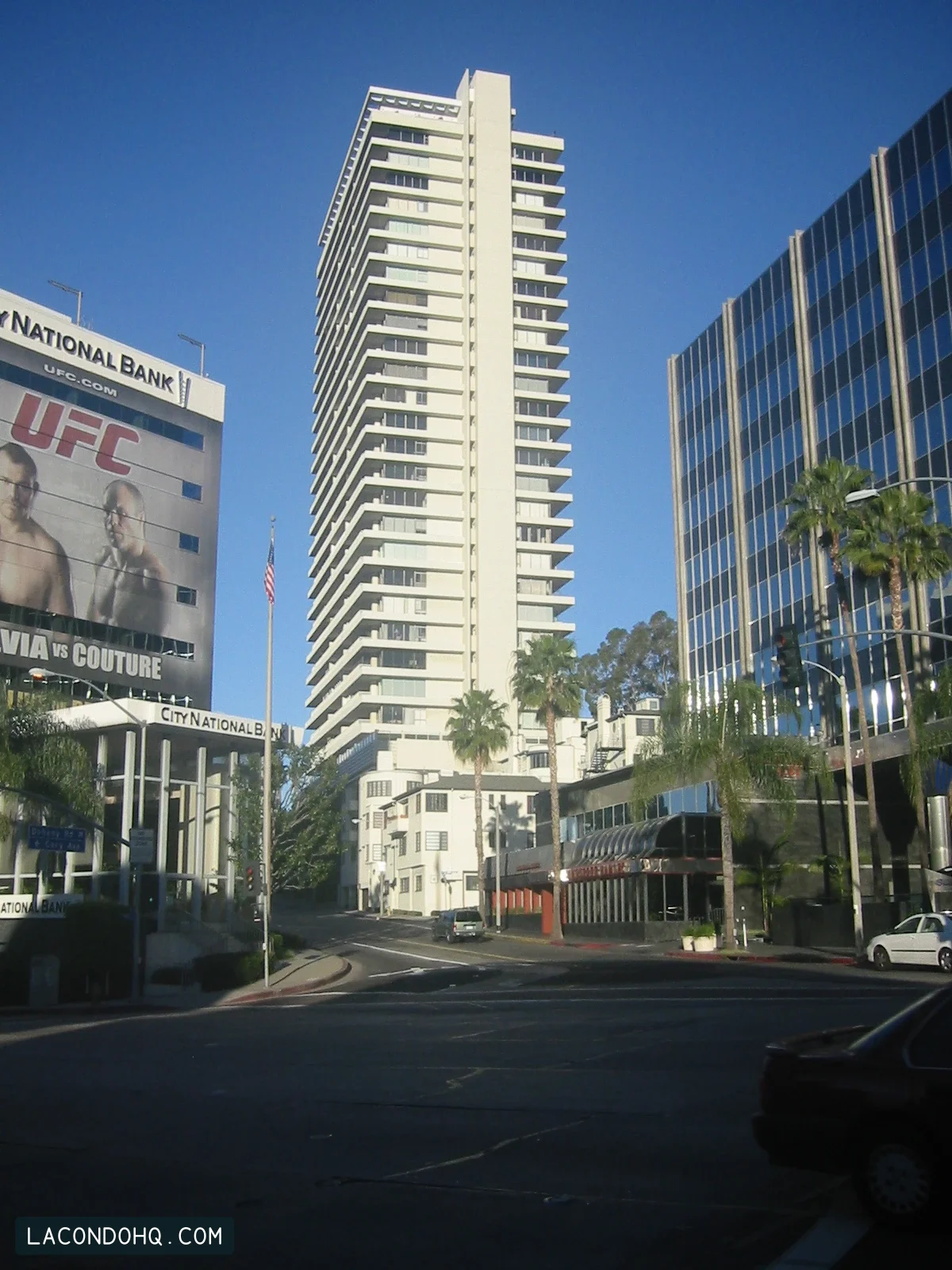
Our directory tracks Los Angeles buildings, neighborhoods and pricing — the records at /buildings/sierra-towers and /buildings/wilshire-terrace are typical of what we hold. None of it includes your association's declaration, insurance policy or budget report, and those three documents decide your question.
This is general information current as of September 1, 2026, and not legal advice. Declarations differ building by building, and the outcome of a water loss depends on facts we cannot see from here. Confirm your position against your recorded declaration, and with a California attorney where the amounts justify it.
We are a research and listings platform, not a brokerage. We do not list on the MLS, negotiate offers or close transactions. When you are ready to see specific buildings, we introduce you to a licensed partner agent.
Written by
Publisher and editor, LA Condo HQ
LA Condo HQ is published by Eltherion, LLC. This article is not reviewed by a licensed real estate agent or broker and is not professional advice.