Current numbers, September 28, 2026
Condos listed on the MLS right now, refreshed every six hours.
| Neighborhood | For sale | Median asking | Median $/sq ft | For rent | Median rent |
|---|---|---|---|---|---|
| West Hollywood | 174 | $899K | $858 | 184 | $4,825/mo |
| Beverly Hills | 70 | $1.91M | $905 | 83 | $5,500/mo |
Medians appear only when enough listings publish the figure; a dash means too few to report. Full neighborhood reports
Two Westside icons, one boulevard apart
West Hollywood and Beverly Hills share a border along the eastern edge of the Westside, but they represent two very different ideas of Los Angeles living. WeHo is a dense, walkable, design-forward city built for people who want the Sunset Strip, nightlife and a car-optional urban life. Beverly Hills is the global byword for luxury: palm-lined streets, Rodeo Drive, trophy estates and a small tier of white-glove condos on Wilshire. For a condo buyer, the choice is really about pace, price and the kind of building you want to come home to. This guide compares the two on lifestyle, cost, housing stock and the diligence each one demands.
West Hollywood: walkable, design-forward, always on
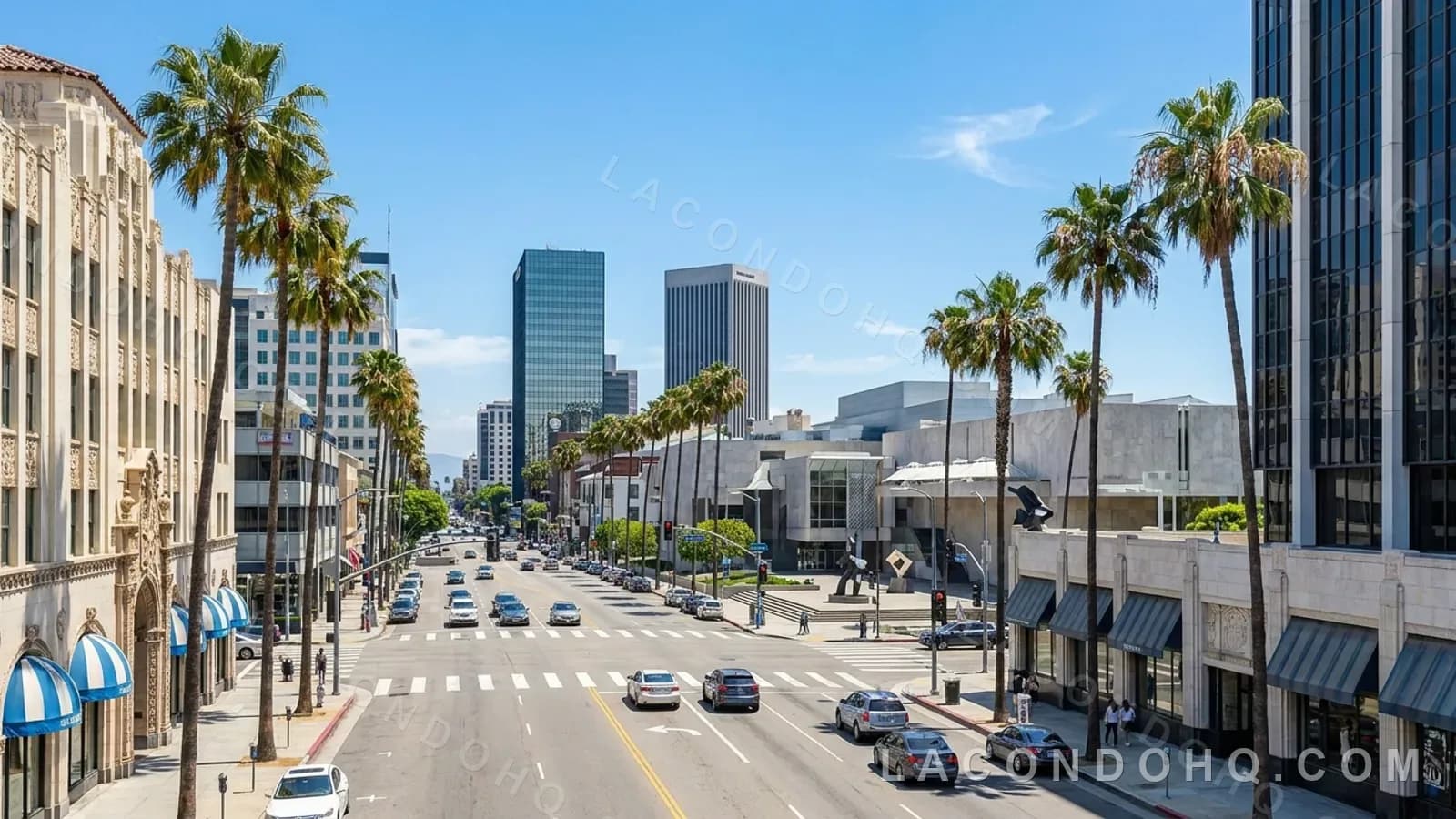
WeHo packs an enormous amount into 1.9 square miles wedged between Beverly Hills and Hollywood. It is one of the most walkable places in all of Los Angeles, with restaurants, gyms, galleries and bars on foot, the Sunset Strip's legendary venues, Robertson and Melrose shopping, the Pacific Design Center, and Santa Monica Boulevard's Boystown at the heart of LA's LGBTQ+ nightlife. The buyer pool skews to entertainment and creative professionals, a large and influential LGBTQ+ community, and design-minded urbanites who would rather not commute by car. The housing stock is heavily condos and apartments: mid-century low-rises along the Strip, sleek new construction near the design district, and rent-stabilized Spanish and Art Deco buildings on the tree-lined residential streets. You buy WeHo for energy and location.
Beverly Hills: prestige, privacy and Condo Canyon
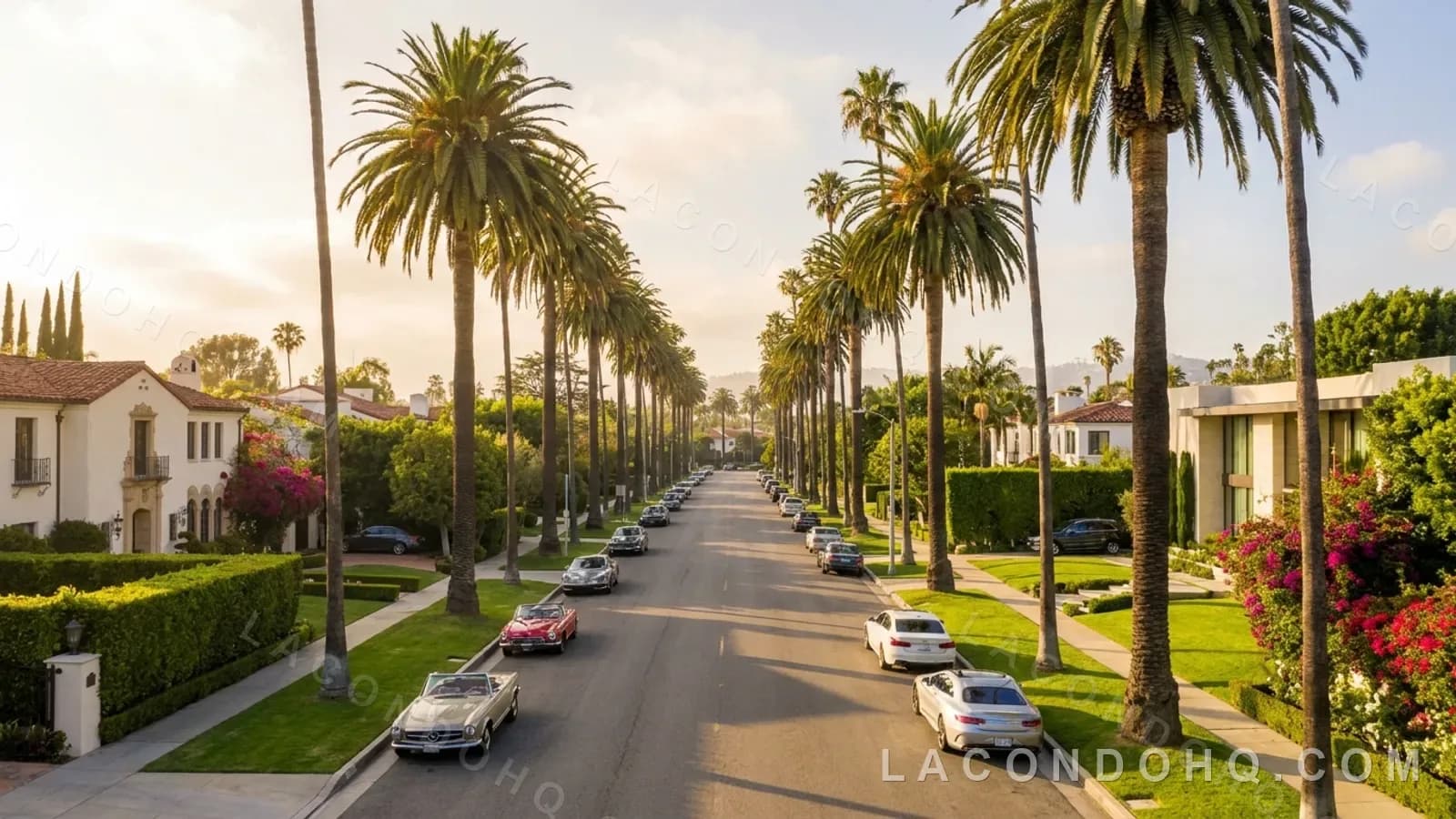
Beverly Hills is a self-governed city and a global luxury brand in its own right. Its housing is dominated by grand single-family estates in the Flats and the hillside Trousdale Estates, but for condo buyers the action is a tier of full-service luxury towers along Wilshire Boulevard's Condo Canyon and around the business triangle. Buyers range from entertainment moguls and foreign ultra-high-net-worth families to established professionals drawn by the elite Beverly Hills Unified School District and white-glove privacy. The draw is the unmatched address, walkability to Rodeo Drive, top-tier security and a rare mix of central Westside location with low-density living. Condo inventory is thinner than WeHo's, and it is priced accordingly.
What condos cost in each
The median price gap is the clearest signal of what separates these two, and price per foot adds a twist. As of September 26, 2026, the median asking price on condo listings in West Hollywood was about $899,000, roughly $866 per square foot (/market-reports/west-hollywood), across 174 condos listed for sale on LA Condo HQ, a deep, varied stock from compact one-bedrooms to new luxury units. Beverly Hills' median asking price was about $1.9 million, roughly $892 per square foot (/market-reports/beverly-hills), across 71 listings in a smaller, more exclusive pool of full-service condos. So Beverly Hills asks roughly twice as much on the median but only about 3 percent more per square foot: its premium comes mostly from bigger residences, not from pricier space. These are asking prices, not closed sales, and the citywide picture is at /market-stats.
The daily-life test
Picture a Tuesday. In WeHo you walk to coffee, a workout, dinner and a show, and you trade square footage and quiet for that density and a genuine urban-LA rhythm. In Beverly Hills you trade some of that walk-everywhere nightlife for prestige, security, top schools and calmer, lower-density streets, with Rodeo Drive and the business triangle within reach. Renters-turned-buyers and nightlife-loving urbanites tend to land in WeHo; families prioritizing schools, and buyers who want the address and the privacy, tend to land in Beverly Hills. Neither is better in the abstract; they answer different questions.
Rent control, HOA dues and the diligence both demand
One crucial WeHo-specific point: West Hollywood has one of the strongest rent-stabilization ordinances in the region, so if you are buying a condo as an investment to rent out, understand the local RSO rules before you count on any particular rent. In Beverly Hills, the condo tier is full-service, and the monthly HOA dues that fund staff, security and amenities belong in your math from the start. In both cities, California gives you real tools: the Davis-Stirling Act lets you review the association's budget, reserve study and governing documents before closing, and SB 326 balcony and exterior-element inspections matter in older buildings. Because standard California policies exclude earthquake damage, confirm the building's coverage and your own loss-assessment limits. Our LA guides on RSO rules, Davis-Stirling and earthquake insurance walk through each.
Which one fits you
West Hollywood fits the buyer who wants a walkable, design-forward, always-on urban life and is comfortable trading space and quiet for location and energy, at a relative discount to its famous neighbor. Beverly Hills fits the buyer who wants the address, the schools, the security and a calmer low-density setting, and can pay the premium that scarcity and prestige command. Many buyers can feel the difference within a block of the border. Start with our West Hollywood and Beverly Hills neighborhood guides and building profiles to compare specific buildings, and check /market-stats for where the numbers stand today.
Questions buyers ask about West Hollywood and Beverly Hills
How much more expensive are Beverly Hills condos?
Substantially on the median, barely per square foot. As of September 26, 2026, the median asking price on condo listings in West Hollywood was about $899,000, roughly $866 per square foot, against about $1.9 million and roughly $892 per square foot in Beverly Hills. The Beverly Hills premium comes mostly from larger residences in a smaller, more exclusive pool of full-service condos. These are asking prices on listings published on LA Condo HQ, not closed sales.
How big is West Hollywood?
Just 1.9 square miles, wedged between Beverly Hills and Hollywood, and it packs an enormous amount into that footprint. It is one of the most walkable places in all of Los Angeles, with restaurants, gyms, galleries and bars on foot, the Sunset Strip's venues, Robertson and Melrose shopping, the Pacific Design Center, and Santa Monica Boulevard's Boystown at the heart of the city's LGBTQ+ nightlife.
Where are the Beverly Hills condos?
Mostly in a tier of full-service luxury towers along Wilshire Boulevard's Condo Canyon and around the business triangle. The city's housing is dominated by grand single-family estates in the Flats and the hillside Trousdale Estates, so condo inventory is thinner than West Hollywood's and priced accordingly.
Does rent control affect West Hollywood condos?
It can. West Hollywood has one of the strongest rent-stabilisation ordinances in the region, so if you are buying a condo as an investment to rent out, understand the local RSO rules before you count on any particular rent.
What diligence do both cities require?
California gives you real tools. The Davis-Stirling Act lets you review the association's budget, reserve study and governing documents before closing, and SB 326 balcony and exterior-element inspections matter in older buildings. Because standard California policies exclude earthquake damage, confirm the building's coverage and your own loss-assessment limits.

Written by
LA Condo HQ
Real-estate research publisher
LA Condo HQ is published by Eltherion, LLC to help readers research Los Angeles buildings, neighborhoods and real-estate decisions. We publish source notes, ownership guides and practical tools, and help readers request introductions to licensed partner agents. We are not a licensed brokerage.